- What is Business Asset Disposal Relief?
- Business Asset Disposal Relief Rates and Lifetime Limit for 2026
- Who Qualifies for Business Asset Disposal Relief?
- What Disposals Qualify for Business Asset Disposal Relief?
- How to Claim Business Asset Disposal Relief — Step by Step
- Business Asset Disposal Relief for Limited Company Shareholders: Worked Example
- Business Asset Disposal Relief for Sole Traders and Partnerships
- Business Asset Disposal Relief Changes 2024–2026: What Business Owners Need to Know
- Business Asset Disposal Relief vs Investors' Relief — Key Differences
- How to Plan Your Sale to Maximise Business Asset Disposal Relief
- Common Business Asset Disposal Relief Mistakes and How to Avoid Them
- Business Asset Disposal Relief Calculator: Estimate Your Tax Saving
- Ready to Sell Your Business?
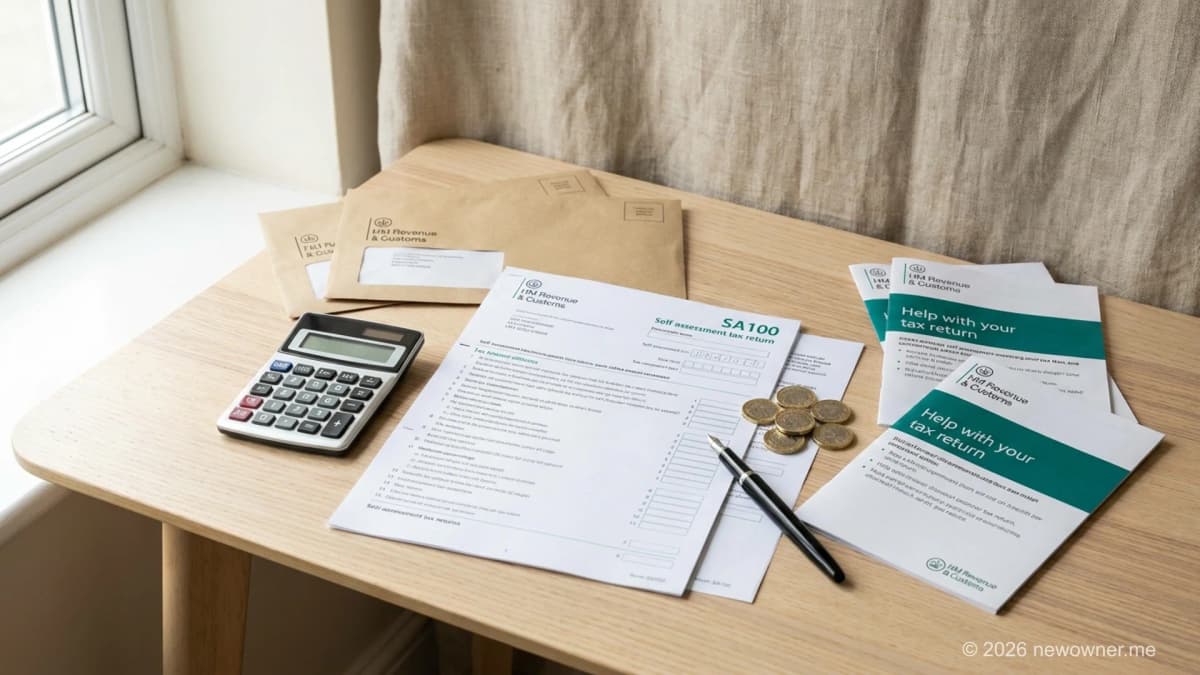
What is Business Asset Disposal Relief?
Business Asset Disposal Relief (BADR) lets qualifying UK business owners pay a reduced rate of Capital Gains Tax when they sell their business or shares. For disposals made on or after 6 April 2026, that reduced rate is 18%, against the standard CGT rate of 24% for higher-rate taxpayers. The relief applies to a lifetime maximum of £1 million in qualifying gains.
If you've been searching for this under the old name, you're in the right place. Business Asset Disposal Relief was called Entrepreneurs' Relief until 6 April 2020. The rename came alongside a brutal cut to the lifetime limit, from £10 million down to £1 million, as part of the March 2020 Budget. The relief itself works the same way; only the name and the limit changed.
Who benefits? Sole traders and business partners selling their business, and directors or employees selling shares in their own company. The relief is supposed to reward people who actually built a trading business over years, not those parking investments in a company wrapper to dodge tax.
For HMRC's official eligibility rules, see GOV.UK Business Asset Disposal Relief. The ICAEW tax faculty also publishes technical commentary on BADR developments, and the Chartered Institute of Taxation tracks consultation responses.
Important disclaimer: This guide is for information only. Tax law is complicated and your specific circumstances will affect what relief you can claim. Always take advice from a qualified UK tax adviser before making decisions based on this content.
Business Asset Disposal Relief Rates and Lifetime Limit for 2026
I've been watching this rate move for years, and the last 18 months have been the biggest shake-up since 2010. Before the Autumn 2024 Budget, BADR sat at 10%, flat and predictable. Budget 2024 ended that.
The rate timeline
| Period | BADR Rate | Standard CGT (higher rate) |
|---|---|---|
| Up to 5 April 2025 | 10% | 20% |
| 6 April 2025 – 5 April 2026 | 14% | 24% |
| From 6 April 2026 | 18% | 24% |
The lifetime limit stays at £1,000,000 across your entire life. You can make multiple disposals and claim BADR each time, provided the cumulative total doesn't exceed £1m.
What the rate increase actually costs
The 2026 rate increase stings. At 10%, the maximum saving on a £1m gain was £100,000 compared with the 20% standard rate. At 18% versus 24%, you're now looking at £60,000. Still a chunky tax saving worth planning for, but smaller than what sellers used to walk away with.
For higher-rate taxpayers selling shares, here is what that looks like in practice:
| Disposal gain | Tax without BADR (24%) | Tax with BADR (18%) | Tax saving |
|---|---|---|---|
| £250,000 | £60,000 | £45,000 | £15,000 |
| £500,000 | £120,000 | £90,000 | £30,000 |
| £1,000,000 | £240,000 | £180,000 | £60,000 |
| £2,000,000 | £480,000 | £180,000 on first £1m + £240,000 on remainder | £60,000 |
Note: gains above £1m are taxed at the standard CGT rate. Annual CGT allowances aren't included above.
Tax saving still meaningful: £60,000 off your tax bill on a £1m disposal is real money. Claim it if you qualify, but get advice early. The qualifying period rules mean you can't fix problems at the last minute.
Who Qualifies for Business Asset Disposal Relief?
BADR qualification isn't complicated, but you do need to meet specific conditions. You also need to have met them for at least two years before the disposal. That two-year window is where most sellers I see come unstuck.
Sole traders and business partners
If you are a sole trader or a partner in a trading partnership:
- You must have owned the business for at least two years before the disposal
- The business must be a genuine trading business (not an investment activity)
- You must sell either the whole business or a part of it. You cannot just cherry-pick individual assets
Limited company directors and shareholders
This is the most common scenario. To qualify:
- You must hold at least 5% of the ordinary shares in the company
- You must have at least 5% of the voting rights
- You must be entitled to at least 5% of the distributable profits and 5% of the net assets on a winding up
- You must be an employee or office holder (director qualifies) of the company
- The company must be a personal company (broadly, a trading company where you meet the ownership tests)
- The company must carry on trading activities (not investment-based activities)
- All of these conditions must have been met for at least two continuous years ending on the date of disposal
The employment or office holder test
This one trips people up. You can own 100% of the shares, but if you stopped being a director or employee before the two-year qualifying period was complete, you may not qualify. Being a shareholder on its own isn't enough.
EMI option shares
If you hold shares acquired through an Enterprise Management Incentive (EMI) option, different conditions apply. The main difference: the 5% minimum holding doesn't apply to EMI shares. You just need to have been granted the option at least two years before the disposal.
Check your 5% stake carefully. If the company has issued further shares to employees, investors, or as part of an EIS round, your holding might have been diluted below 5% without you noticing. Dilution below 5% can disqualify you from BADR. Check the current share register before you assume you qualify.
What Disposals Qualify for Business Asset Disposal Relief?
Not every business asset disposal qualifies. HMRC distinguishes between different kinds of sale, and the qualifying category matters.
Selling a sole trader business or partnership share
You can claim BADR when you sell the whole of a sole trader business, or your share of a trading partnership, as a going concern. You can also claim on qualifying business assets if you dispose of them within three years of ceasing to trade.
Selling shares in your personal company
This is the most common route. Selling shares in a trading company where you meet the qualifying conditions (5% ownership, employment, two-year hold) qualifies for BADR.
Assets held personally but used by the business
If you own an asset personally, say a property, and you've been letting your trading company or partnership use it, you can claim BADR on that asset if you simultaneously dispose of at least 5% of your shares or partnership interest. You must have owned the asset and made it available to the business for at least one year before the disposal.
Management buyouts
A well-structured MBO can qualify for BADR. The conditions still have to be met though. If the director selling to the management team has held qualifying shares for two years and meets the employment test, BADR applies to the disposal proceeds. Get this structured carefully by a tax adviser.
What doesn't qualify
Some common categories that fall outside BADR:
- Selling shares as a passive investor (no employment, no 5% stake)
- Buy-to-let properties, residential or commercial investment property, do not qualify
- Investment companies, or companies where the main activities are investment rather than trading
- Selling individual assets within a continuing business (e.g., selling a piece of equipment out of a business that carries on trading)
- Shares held for less than two years
- Holdings of less than 5% (unless EMI shares)
For detailed technical guidance on what counts as a trading company for BADR purposes, the HMRC Capital Gains Manual (CG63950P) is the authoritative source.
How to Claim Business Asset Disposal Relief — Step by Step
Claiming BADR is straightforward if you prepare properly. Five steps.
Step 1: Verify your eligibility
Work through the qualifying conditions before you complete the disposal. Two years of trading. 5% shareholding and voting rights. Employment or director status. Confirm each one is met. If there's any doubt, take tax advice before you sign anything. You can't retrofit a qualification failure after the fact.
Step 2: Calculate your capital gain
Your gain is the disposal proceeds minus the original cost of your shares or business assets, minus incidental costs of disposal (legal fees, broker fees). If you received shares as part of a reorganisation or bought them at different times, your cost base can be complex. An accountant can calculate this accurately.
Step 3: Complete the Capital Gains pages of your Self Assessment return
Report the disposal on your Self Assessment tax return for the tax year in which the disposal occurred. Tick the box to claim BADR on the Capital Gains summary pages. Enter the qualifying gain, and the relief will be applied at the BADR rate automatically.
For the 2025–26 tax year (disposals from 6 April 2025 to 5 April 2026), the rate is 14%. For 2026–27 onwards, it's 18%.
Step 4: Keep your supporting documentation
HMRC can enquire into your return. Hold on to the sale and purchase agreement, share certificates, proof of your employment or directorship across the qualifying period, company accounts confirming trading activity, and any correspondence about the disposal. Keep these records for at least six years after the disposal.
Step 5: Meet the filing deadline
For Self Assessment, you must file your return by 31 January following the end of the tax year in which the disposal occurred. For a disposal in the 2026–27 tax year (on or after 6 April 2026), the filing deadline is 31 January 2028.
Don't leave the claim to the last minute. Selling a business is stressful enough; the tax return deadline can creep up while you're recovering from completion. Ask your accountant to file early. There's no upside to waiting.
Business Asset Disposal Relief for Limited Company Shareholders: Worked Example
This is the scenario most people searching for BADR end up in: a director who has built a company over several years and is now selling their shares.
Example: Sarah's consultancy
Sarah founded a digital consultancy in 2018. She owns 40% of the shares. She's been a director since incorporation. The company earns most of its income from providing professional services. Clearly a trading company.
In September 2026 (the 2026–27 tax year), she sells her shares for £950,000. Her original share subscription and cost base totals £50,000. Her capital gain is therefore £900,000.
Sarah meets all the qualifying conditions:
- She owns more than 5% of shares and voting rights
- She's a director (qualifies as an office holder)
- The company is a trading company
- She's held the shares for more than two years
Tax calculation:
| Scenario | Tax |
|---|---|
| Without BADR (24% CGT rate) | £216,000 |
| With BADR (18% from April 2026) | £162,000 |
| Tax saving from BADR | £54,000 |
Sarah still has £100,000 of her BADR lifetime allowance remaining after this disposal.
Example: James sells with a gain above £1m
James, a sole trader running a manufacturing business for 12 years, sells in December 2026 for a net gain of £1.6 million.
The first £1,000,000 qualifies for BADR at 18% = £180,000 tax. The remaining £600,000 is taxed at the standard 24% rate = £144,000 tax. Total tax: £324,000.
Without BADR, the whole £1.6m would have been taxed at 24% = £384,000. BADR saves James £60,000.
If the sale had happened before 6 April 2025, the BADR rate would have been 10%, saving James £140,000 instead. More than double. This is why the 2024 Budget changes really hurt sellers who hadn't yet completed.
If you're planning to sell your business and want to understand how tax interacts with deal structure, read how to sell a business in the UK — the complete guide. It walks through the full process from preparation to completion.
Business Asset Disposal Relief for Sole Traders and Partnerships
Sole traders and partnerships have slightly different qualifying conditions to limited company shareholders, but the principle is the same: you must have been running a real trading business for at least two years.
Selling the whole business
If you sell your business as a going concern (assets, goodwill, client relationships), BADR applies to the qualifying gain. The gain is calculated on a business-by-business basis, factoring in the original cost of each asset and goodwill. Goodwill in a sole trader business can be substantial, and it's usually what buyers pay the most for.
Partial disposal after cessation
If you cease trading, you have up to three years to dispose of qualifying business assets and still claim BADR. The three-year window gives you time to wind things down, but don't let it slip your mind. Document the cessation date clearly.
Partnership interests
Selling your share of a trading partnership qualifies, provided you've been a partner for at least two years. Mixed partnerships, where some partners trade actively and others are passive investors, can complicate what portion of the gain qualifies. Take advice if your partnership has non-trading partners or assets that aren't clearly business-related.
Business Asset Disposal Relief Changes 2024–2026: What Business Owners Need to Know
The Autumn 2024 Budget was the biggest change to BADR since the lifetime limit was cut from £10m to £1m in March 2020. If you're planning a business sale, knowing what changed (and what didn't) matters.
The 2024 Budget changes
The Chancellor announced two rate increases:
- From 6 April 2025: BADR rate rises from 10% to 14%
- From 6 April 2026: BADR rate rises from 14% to 18%
The same two-stage increase applied to Investors' Relief (IR), which previously had a £10m lifetime limit. That was cut to £1m in the same Budget.
The standard CGT rates also increased: from 10%/20% to 18%/24% for non-residential property disposals (effective 30 October 2024).
Anti-forestalling rules
HMRC introduced anti-forestalling measures to stop sellers from artificially shifting their disposal date to grab the lower 10% rate. If you exchanged contracts before 30 October 2024 and complete after the rate change, the lower rate doesn't apply unless specific exemptions are met. The rules sit in HMRC's Capital Gains Manual CG64174.
Will BADR be scrapped?
This question comes up in search results all the time, and you can see why. Every Budget brings speculation. The honest answer: there are no announced plans to abolish BADR as of April 2026. The government cut the rate and the lifetime limit in March 2020, then raised the rate again in 2024, but they kept the relief. Scrapping it entirely would be politically contentious.
That said, tax policy changes. If you're planning an exit, don't bet on a specific BADR rate holding beyond the next Budget. If you're within 12 months of a realistic sale, the case for pulling the timeline forward to lock in current rates is worth a conversation with your adviser. For a second view on the anti-forestalling detail and rate transition, BDO's BADR commentary is worth reading alongside the HMRC manual, and the ICAS (Institute of Chartered Accountants of Scotland) tax resource hub covers the Scotland-specific considerations for BADR claims.
The BADR rate increased from 10% to 14% in April 2025, and again to 18% in April 2026. These are confirmed, legislated changes. Any further changes would require new Budget announcements.
Business Asset Disposal Relief vs Investors' Relief — Key Differences
Investors' Relief (IR) gets confused with BADR all the time. They have different qualifying conditions and suit different types of seller.
| Feature | BADR | Investors' Relief |
|---|---|---|
| Who qualifies | Directors, employees, sole traders, partners | External investors (not employees) |
| Minimum holding | 5% ordinary shares | No minimum |
| Employment required | Yes — must be employee or officer | No — must NOT be an employee or paid director |
| Minimum hold period | 2 years | 3 years (shares issued on or after 17 March 2016) |
| Lifetime limit | £1 million | £1 million |
| CGT rate (2026/27) | 18% | 18% |
| Typical user | Founder, MD, director selling their company | Angel investor, family member investor |
In short: if you built and ran the business, BADR is your route. If you invested in someone else's trading company as an outside investor and have never been an employee or director, IR is the relevant relief.
Both offer the same 18% rate from April 2026, and both have the same £1m lifetime limit. The distinction is about who qualifies, not the rate.
If you're considering an outside investment in a trading company as part of exit planning, perhaps bringing in an angel investor or EIS investor, read our guide to private equity vs venture capital vs angel investors for context on how different investor types structure deals.
How to Plan Your Sale to Maximise Business Asset Disposal Relief

There's a real difference between passively hoping BADR applies to your disposal and actively structuring your exit so that it does. These are the planning points worth running past your tax adviser.
Start early; the two-year rule is unforgiving
You can't backfill the qualifying period. If you've held your shares for 18 months when a buyer appears, you can't claim BADR on those shares. The two-year clock starts from when you first held the shares and became an employee or director. If you haven't hit two years, the simplest answer is: don't complete the disposal until you have.
Spousal share transfers
If your spouse or civil partner also holds shares, they can claim their own BADR allowance, up to £1m, on qualifying gains. If each of you qualifies (employment test, 2-year hold), you could collectively shelter up to £2m at the BADR rate. Transfers between spouses are CGT-neutral (no gain/no loss), so gifting shares before a sale can be legitimate tax planning. Get advice; timing and conditions matter.
Watch the 5% threshold
If a fundraising round, an employee share scheme, or an option exercise has diluted your holding below 5%, you'll fail the ownership test. There are protective elections available in some cases ("Section 169S elections"), but they have a strict deadline. If dilution below 5% is on the cards, take advice well before any proposed disposal.
Staggered disposals
If you're selling to a buyer who's happy with a phased acquisition (buying, say, 60% now and 40% in 18 months), each tranche can qualify for BADR separately, provided qualifying conditions are met at the time of each disposal. The combined gain from all disposals still can't exceed the £1m lifetime cap.
BADR and earn-outs
Earn-outs complicate BADR. The gain realised at completion is clear; any future earn-out payment is treated separately, possibly in a different tax year with a different BADR availability (if you've already used the £1m limit). How you structure earn-outs for BADR purposes is a tax-specific question your adviser must address before you sign heads of terms.
For a full picture of how earn-outs and deal terms are negotiated, the steps to selling a business guide covers the negotiation and heads of terms stage in detail.
To see how your business value translates into the gains subject to CGT, and therefore how much BADR is actually worth in your specific deal, read our business valuation guide.
Common Business Asset Disposal Relief Mistakes and How to Avoid Them
The most common BADR mistake I see costs sellers tens of thousands of pounds. It's almost always avoidable with early advice.
Assuming you qualify without checking
The 5% shareholding test, the employment test, and the two-year rule each have technical wrinkles that aren't obvious. Plenty of sellers find out they don't qualify during due diligence, by which point it's too late to fix it. Confirm your eligibility with a tax adviser before you start a formal sale process.
Missing the two-year mark by a short period
If your shares were issued as part of a growth share scheme 20 months ago, you don't qualify yet. If you only became a director of the company 18 months ago, the employment test hasn't been met. These are binary: you meet the qualifying period or you don't.
Claiming on a non-trading company
If your company holds substantial investment assets (a property portfolio, listed shares, or substantial cash that isn't working capital), HMRC may classify it as an investment company rather than a trading company. BADR requires a trading company. If investment activities form a substantial part of the company's work, you may fail the trading test and be denied relief.
Forgetting about the anti-forestalling rules
If you exchanged contracts under a specific set of circumstances before 30 October 2024, you may be subject to anti-forestalling rules that stop you from claiming BADR at the lower historic rate. These situations are specific but not rare. Check whether they apply to you.
Not keeping documentation
HMRC can enquire into your Self Assessment return for up to four years (or longer in cases of careless or deliberate error). You need records of your share certificate, employment contracts, directorship appointments, company accounts, and the sale agreement. Losing these isn't just inconvenient. It can cost you the relief if HMRC challenges your claim.
Treating earn-out payments as qualifying gains after the lifetime limit is used
If your initial disposal uses your full £1m lifetime allowance, any subsequent earn-out payment isn't eligible for BADR. Plan the structure of earn-outs with this in mind. It can influence whether a single payment on completion is more tax-efficient than a phased earn-out.
Thinking about how to extract the most value from your business sale overall? Our guide on how to get the best price when selling your business covers the commercial side: valuation, marketing, and negotiation tactics.
One practical note: if you used an accountant to set up your company but haven't spoken to them about the sale, call now. Business sales aren't the time for DIY tax planning.
Business Asset Disposal Relief Calculator: Estimate Your Tax Saving
There is no official Business Asset Disposal Relief calculator from HMRC, but the maths is straightforward once you know your gain.
Simple calculation steps
Step 1: Calculate your capital gain Disposal proceeds minus cost base minus incidental costs (legal fees, advisory fees) = capital gain.
Step 2: Check your BADR lifetime usage If you've made previous BADR claims, subtract those from the £1,000,000 lifetime limit. The remaining allowance is your available BADR cap.
Step 3: Apply the rates
- Gains up to your remaining BADR allowance: taxed at 18% (from 6 April 2026)
- Gains above your BADR allowance: taxed at your applicable standard CGT rate (18% basic rate, 24% higher rate)
Step 4: Deduct the annual CGT allowance The annual exempt amount for 2026–27 is £3,000. Apply this to your gain before calculating tax due. It reduces whichever tranche of gain you'd otherwise pay tax on.
Quick reference table
| Capital gain | Prior BADR used | BADR available | Tax with BADR | Tax without BADR (24%) | Saving |
|---|---|---|---|---|---|
| £200,000 | £0 | £1,000,000 | £36,000 | £48,000 | £12,000 |
| £500,000 | £0 | £1,000,000 | £90,000 | £120,000 | £30,000 |
| £750,000 | £300,000 | £700,000 | £180,000* | £180,000 | £12,000* |
| £1,000,000 | £0 | £1,000,000 | £180,000 | £240,000 | £60,000 |
| £1,500,000 | £0 | £1,000,000 | £300,000 | £360,000 | £60,000 |
*£700k at 18% = £126,000; remaining £50k at 24% = £12,000; total £138,000 vs £180,000 without BADR. Simplified for illustration and excludes annual exempt amount.
These figures are before the annual CGT allowance and assume higher-rate taxpayer status. They're illustrative only. Your actual liability will depend on your income in the year of disposal and any other reliefs available.
For a more accurate picture of what your business is actually worth before you run the tax numbers, see our guide to business valuation in the UK.
Ready to Sell Your Business?
BADR planning is one piece of the exit puzzle. The bigger challenge is finding a qualified buyer at the right price. Doing it without burning confidentiality, time, or negotiating power is harder than it sounds.
NewOwner is a UK marketplace for buying and selling businesses. Sellers list directly, reaching thousands of verified buyers without upfront broker fees. You control what information is visible publicly, and what's shared only after an NDA is in place.
If you're planning to sell in the next 6 to 18 months, listing early lets you test buyer appetite, refine your asking price, and build a pipeline before you commit to a formal sale process. List your business for sale on NewOwner and reach buyers actively searching for businesses like yours.
Getting BADR right and getting the sale right are both worth doing properly. NewOwner helps with the latter: connecting sellers with a curated pool of serious UK buyers who want owners that have already planned their BADR claim.
Ready to sell your business?
Get Started