- Why an off licence for sale is one of the most traded UK businesses
- What an off licence actually earns
- What an off licence business for sale costs
- The premises licence: how it transfers and what can go wrong
- Reading the catchment: what makes one shop worth double another
- Three rule changes that will reshape the category mix
- Due diligence: what to check on a convenience store
- A worked example: the numbers on a corner shop
- Is buying an off licence a good move in 2026?
Why an off licence for sale is one of the most traded UK businesses
The UK has 50,486 convenience stores and the ACS Local Shop Report forecast £48.8bn of sales for 2025. Seven in ten of those stores are run by independent retailers rather than multiples, which works out at roughly £18,600 of turnover per store per week across the sector.
That ownership split explains why so many off licences come to market. Independent shops are owned by people, and people retire, get tired, move, or decide the 6am starts aren't worth it any more. Every year a large slice of the sector changes hands, and most of it is bought by first-time owners.
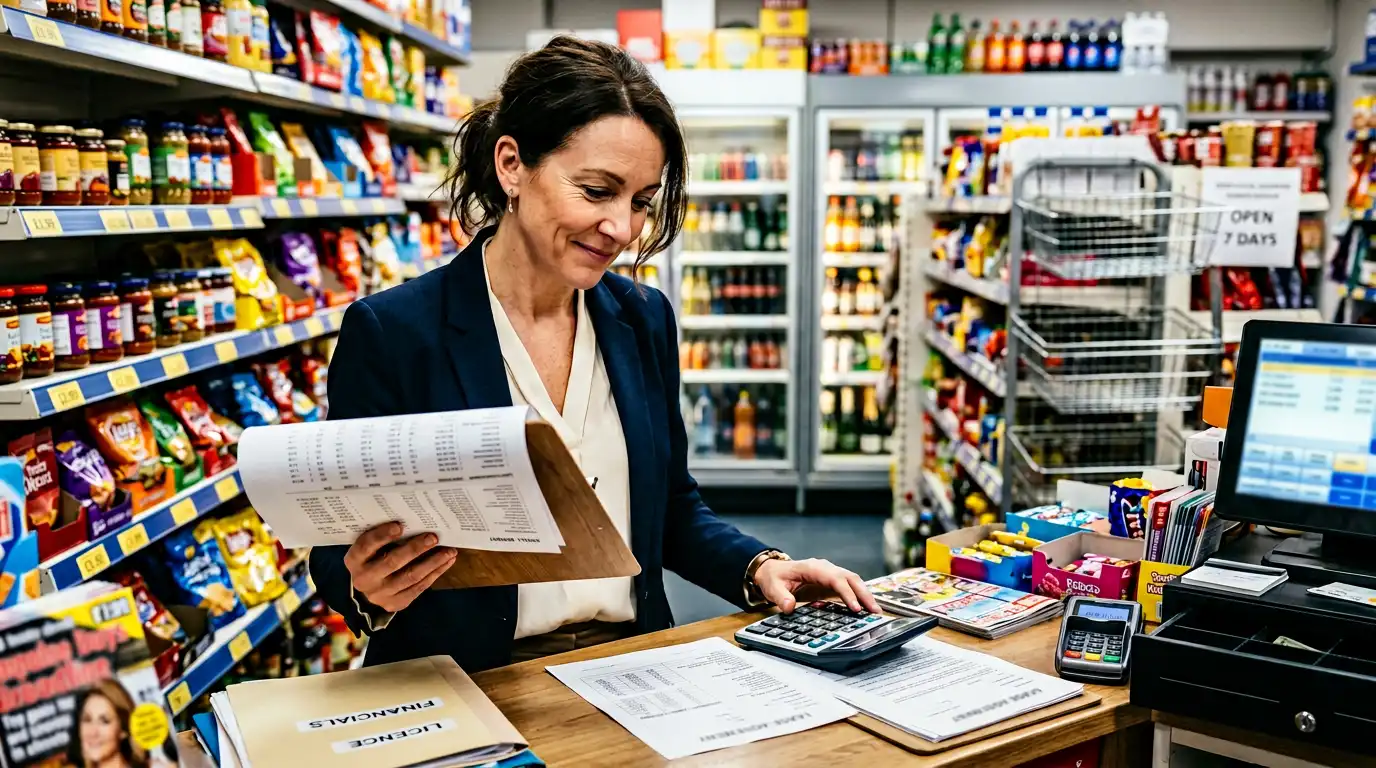
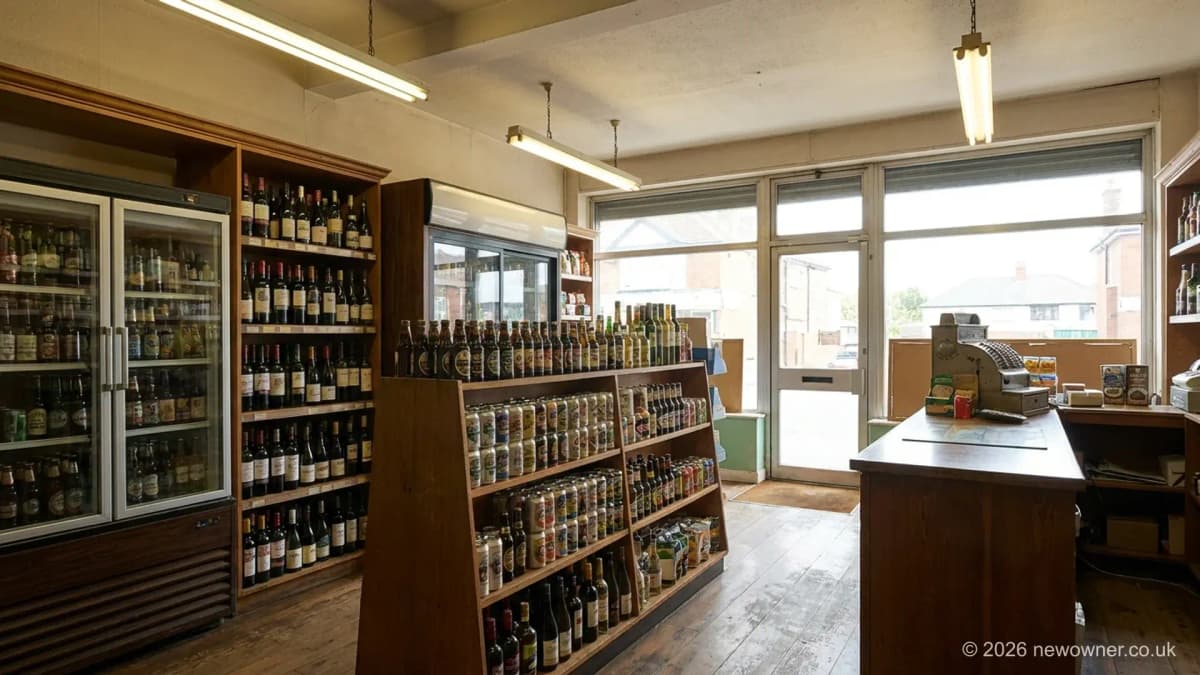
Terminology first, because listings use the words loosely. An "off licence" strictly means a premises licensed to sell alcohol for consumption elsewhere. In practice almost every one also trades as a convenience store, selling groceries, snacks, soft drinks, tobacco, and increasingly services like parcel drop-off, bill payment and lottery. When you see an off licence for sale in the UK, you're usually looking at a corner shop where alcohol is the highest-margin category.
This guide covers what these shops actually earn, what buyers pay, how the licence transfers, and the regulatory changes that will reshape the category mix over the next decade. If you're comparing against other retail formats, our guide to supermarkets and convenience stores for sale covers the larger end of the same market.
What an off licence actually earns
Turnover is easy to see and margin is where the business lives. The two move independently, and that catches out a lot of first-time buyers.
First, what a convenience store actually sells. The ACS Local Shop Report, using IGD data for the overall convenience market, puts tobacco, e-cigarettes and vaping products at 18.8% of sales, alcohol at 15.2%, chilled foods at 12.9%, soft drinks at 7.9% and canned and packaged grocery at 7.6%. Bread and bakery is 5.7%, confectionery 6.4%, and hot food and drinks to go just 1%.
That last figure is the one to stare at. Hot food and drinks to go is the highest-margin thing in the shop and it's 1% of the market. Most independents have barely touched it.
Category margins vary hugely:
- Tobacco is the classic trap. High turnover, margin usually around 6% to 8%. It drives footfall and almost nothing else. The sector average is 18.8%, so a shop running tobacco at 30% of sales is a much weaker business than one at 12%.
- Alcohol does the heavy lifting: beer, wine and spirits typically run 22% to 30%, and chilled premium beer and wine can go higher.
- Grocery, ambient and household sit in the middle, around 20% to 25%.
- Chilled, food to go and hot drinks are the best margin in the shop, often 35% to 50%, and the category where independents most often underinvest.
- Services (parcels, lottery, PayPoint, ATM) earn commission rather than margin. Small money, but they pull people through the door who then buy something.
Blended gross margin across a well-run independent typically lands between 20% and 25%. Below 18% usually means the shop over-indexes on tobacco or is buying badly. Above 27% is either an excellent chilled and food-to-go mix or a pricing position the local competition will eventually attack.
From turnover to owner's earnings
| Weekly turnover | Blended GP at 22% | Typical annual SDE |
|---|---|---|
| £8,000 | £1,760 | £30,000 – £45,000 |
| £14,000 | £3,080 | £55,000 – £80,000 |
| £22,000 | £4,840 | £90,000 – £130,000 |
Those SDE ranges assume the owner works in the shop. Take a full management team out of the numbers and they drop sharply, which matters if you plan to buy and not stand behind the counter. Our business valuation guide explains how to normalise owner's earnings before you agree a price.
What an off licence business for sale costs
Three components, and sellers frequently blur them.
Goodwill is what you pay for the trade. Leasehold convenience stores usually sell at 1.5x to 3x SDE, or if the seller is old-school, a multiple of weekly gross profit. Expect £40,000 to £180,000 for most independent shops.
Stock at valuation is separate and paid on completion, priced at cost by an independent stocktaker on the day. A typical convenience store carries £15,000 to £45,000 of stock. This trips people up constantly: the £90,000 shop is a £120,000 cheque once stock is added. Budget for it.
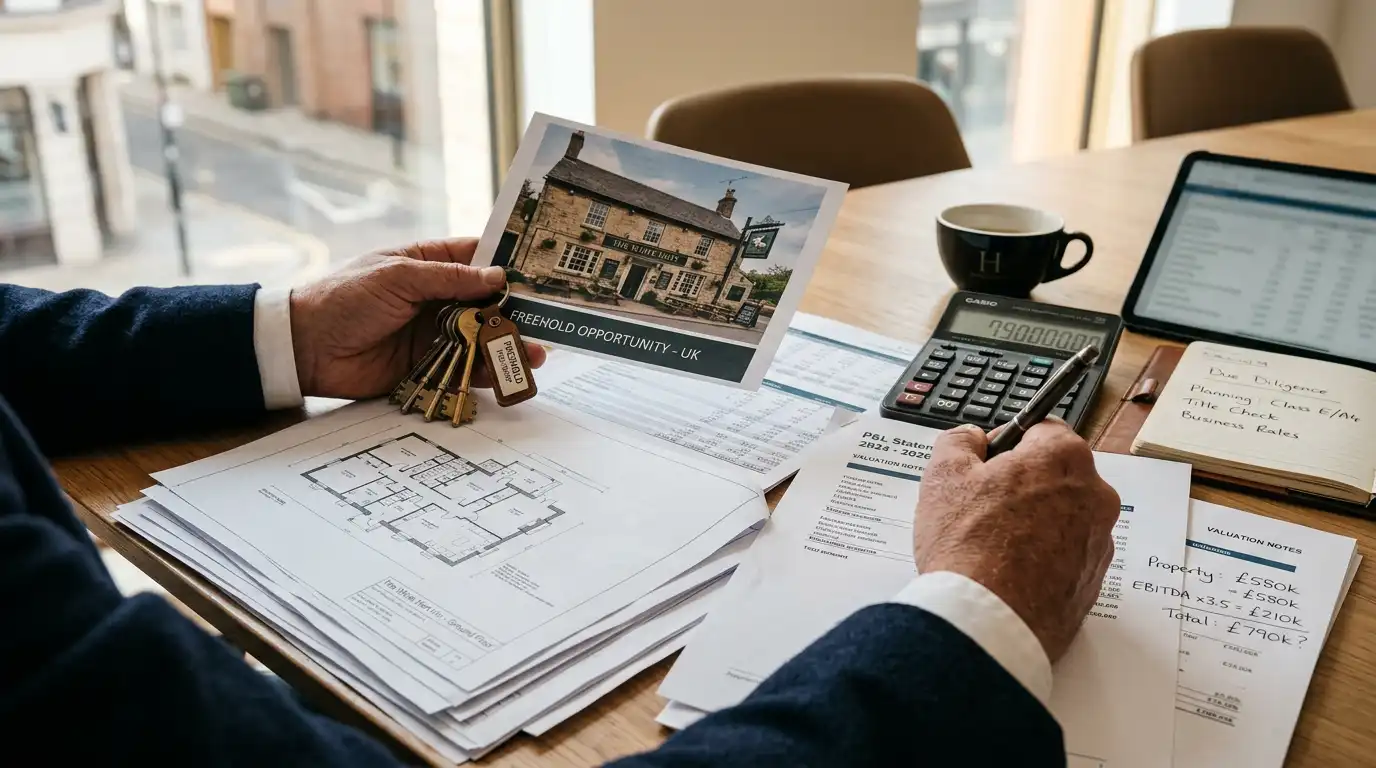
Property, if freehold. Many off licences come with a flat above, which changes the deal entirely. You're buying a mixed-use investment with a shop attached, and the price reflects local residential values as much as trading performance. £300,000 to £700,000 is common outside London. Our guide to freehold businesses for sale covers why that changes your financing.
A few pricing realities worth knowing. Shops with a Post Office counter or an ATM command a premium because both drive dependable footfall. Shops on a lease with fewer than five years unexpired get discounted hard, because you can't finance against a short lease and you can't sell it on easily either. And any shop where the accounts and the till reports disagree should be valued on the till reports.
A note on these numbers. The UK has no published dataset of small business asking prices or transaction multiples: neither ONS nor any regulator collects them. The ranges above are drawn from current listings on the main UK marketplaces and from how brokers price this sector, so treat them as a sense-check on whether an asking price is sane, not as a valuation. The only numbers that matter for your deal are the ones in the seller's accounts.
The premises licence: how it transfers and what can go wrong
You cannot sell alcohol without a premises licence, and the licence doesn't come free with the keys. This is the single most common way an off licence purchase goes sideways.
Three separate things have to be right:
The premises licence authorises alcohol sales at that address, with conditions attached about hours, layout and often CCTV or age verification policy. It's transferred to you by application to the local licensing authority. The transfer fee is modest, around £23, and the police get a short window to object. You can apply for immediate effect so trading isn't interrupted, but that only works if the paperwork is right on the day.
The Designated Premises Supervisor is the named individual responsible for alcohol sales. Change of ownership almost always means a DPS variation, and the outgoing DPS has to consent.
A personal licence is what the DPS must hold. It requires an accredited qualification, a DBS check and an application to a licensing authority. It takes weeks, not days. If neither you nor anyone you're employing holds one, start that process before you exchange, not after.
Annual fees are banded by rateable value: GOV.UK's licensing fee levels put new applications at £100 to £635 and annual charges at £70 to £350 depending on band.
What to check during due diligence:
- Read the actual licence, including the conditions and the plan. Conditions from a past enforcement problem stay attached to the premises.
- Check for any pending review applications. A licence under review is a licence that might be cut back or revoked.
- Confirm the permitted hours match the trading hours the seller has shown you. Shops selling outside their permitted hours will show turnover you can't legally replicate.
- Ask the licensing authority directly about complaint history. It costs nothing and they'll usually tell you.
If a seller is casual about the licence, that's informative. It's the legal foundation of a third of the shop's gross profit.
Reading the catchment: what makes one shop worth double another
Two shops with identical turnover can be worth wildly different money. The difference is almost always catchment quality and how defended it is.
Footfall type, not just footfall volume. A shop on a commuter route sells coffee, sandwiches, newspapers and cigarettes between 7am and 9am, then goes quiet. A shop on a residential estate sells milk, bread, alcohol and top-up groceries in the evening. The residential shop has lower peak intensity and much better basket values. Understand which one you're buying, because the improvement levers are completely different.
The five-minute walk. Draw a circle you can walk in five minutes. How many homes are in it? Is there a school, a bus stop, a park, a doctor's surgery, a busy pub? Convenience retail is a genuinely local business, and beyond about a ten-minute walk you stop existing for most customers.
Competition, present and future. Walk a mile in each direction and note every shop that sells the same things: other independents, Co-op, Tesco Express, Sainsbury's Local, discounters, petrol forecourts. Then check the local authority's planning portal for pending applications. A new supermarket opening 400 metres away can take 15% to 25% of a shop's turnover, and those applications are public months before anyone breaks ground. This one check has saved more buyers than any other on this page.
Parking and delivery access. Can customers stop? Can a wholesaler's lorry get to the door? A shop where deliveries have to be carried 60 metres costs you real staff time every week.
The alcohol licence hours against the neighbourhood. A late licence in an area with a cumulative impact policy is valuable and effectively unrepeatable, because the licensing authority won't grant new ones. That's a genuine moat, and sellers frequently don't price it.
Services as anchors. A Post Office counter, a PayPoint, a parcel drop-off point, a lottery terminal, an ATM. Each earns little directly and pulls people through the door reliably. A shop with a Post Office counter has footfall that a competitor cannot easily replicate.
The question I'd want answered: if a Tesco Express opened 300 metres away next year, what would still bring people to this shop? If the honest answer is "nothing, it's just the nearest place", you're buying a business with no defence. If the answer involves a late licence, a Post Office, a genuinely local reputation or a location a multiple can't get planning for, you're buying something durable.
Three rule changes that will reshape the category mix
Buying a convenience store in 2026 means buying into a decade of scheduled regulatory change. None of it is fatal. All of it needs planning.
The generational tobacco ban. The Tobacco and Vapes Bill would make it an offence to sell tobacco to anyone born on or after 1 January 2009, permanently. Tobacco doesn't disappear overnight, it declines by cohort, year after year. If you're modelling a shop where tobacco is 25% or 30% of turnover, understand that this line has a structural downward path and plan the replacement categories now.
Single-use vapes are already gone. The ban came into force on 1 June 2025 across the whole UK. Disposables were a genuine profit engine for convenience retailers, and that revenue moved to refillable and rechargeable devices, at different margins and with different stock risk. Check what the seller's vape sales look like now, not what they looked like in 2024.
The deposit return scheme for drinks containers launches in October 2027 in England and Northern Ireland. Stores will need to handle returns, and for smaller shops the back-of-store space and the handling time are the real cost, not the deposit itself. Ask whether the shop has the physical room, because a store with no back area faces a genuine operational problem.
Then there's crime, where the direction of travel finally turned this year.
The ACS Crime Report 2026 put shop theft at 5.8 million incidents, down from 6.2 million the year before, and ACS headlined it as a turning point. Costs kept rising anyway: £354m of crime against the sector, or £7,137 per store, plus £313m spent on prevention, which works out at £6,213 per store. Between them that's an 11p crime tax on every transaction.
The rest of the picture is uglier than the theft numbers suggest. The sector recorded over 67,000 incidents of violence, more than 5,900 robberies, and over 954,000 incidents of verbal abuse, with 89% of shop colleagues reporting verbal abuse in the past twelve months. If you're buying a shop and planning to work the counter yourself, that's the job.
For the P&L, the practical point is shrinkage. Check whether stock loss is properly accounted for, because a seller who ignores it will show you a gross margin the shop doesn't actually achieve. Budget for prevention spend too, since £6,213 a year is real money on a shop earning £60,000.
Due diligence: what to check on a convenience store
The generic checks in our due diligence checklist all apply. These are the retail-specific ones.
EPOS data, not accounts. Modern tills record everything: turnover by day, by hour, by category, basket size, promotions. Ask for twelve months of EPOS reports. They're far harder to manipulate than a set of accounts and they tell you the shape of the business, not just the size.
Supplier terms. Which wholesaler, what rebates, what symbol group agreement if any. Symbol fascia agreements (Premier, Nisa, Best-one, Londis and the rest) carry obligations and minimum purchase commitments that transfer or terminate on sale. Read the agreement.
Stock quality. Walk the shop with a date-checker's eye. Slow-moving lines and out-of-date stock tell you how the shop has been run, and you'll be paying for that stock at cost.
The lease. Unexpired term, rent review pattern, service charge, repairing obligations, and whether the landlord consents to assignment. A full repairing and insuring lease on an old building can cost you more than the shop earns.
Business rates. Check the rateable value and what relief applies. Small Business Rate Relief follows the ratepayer, so confirm your own eligibility.
The competition. Walk a mile in each direction. A new Tesco Express or Sainsbury's Local opening nearby can take 20% of a shop's turnover, and planning applications are public. Check them.
The hours. This one's cultural rather than financial. ACS puts average opening at 13.7 hours Monday to Saturday and 12.7 on Sunday, so roughly 95 hours a week, and 12% of stores open 24 hours. If the seller and their family cover most of it themselves, the SDE you're being shown includes unpaid family labour. Cost that properly at market wages, or you'll buy a job that pays less than the job you left.
A worked example: the numbers on a corner shop
This worked example is an illustrative composite built from typical market figures, not a record of a specific transaction. Use it as a method for taking a deal apart, and run your own numbers on any business you actually look at.
Here's a typical deal, modelled the way I'd model it. A leasehold off licence and convenience store on a residential parade, asking £110,000 plus stock, with nine years unexpired at £16,500 a year.
The seller's headline. "£13,500 a week, 23% margin, nets me £70,000. My wife and I run it."
Rebuilding it from twelve months of EPOS reports:
| Line | Annual | Notes |
|---|---|---|
| Turnover | £702,000 | £13,500 a week, confirmed by till data |
| Gross profit at 21.4% | £150,200 | Below the claimed 23%, once shrinkage was included |
| Rent | £16,500 | Nine years unexpired |
| Business rates after relief | £4,100 | Small Business Rate Relief applied |
| Employed staff | £38,600 | One part-timer plus weekend cover |
| Energy, insurance, waste, card fees | £19,400 | Chillers are the big energy line |
| Repairs, sundries, accountancy | £7,200 | |
| Owner's earnings (SDE) | £64,400 | Two owners working the shop |
At £110,000 that's 1.7x SDE, which looks cheap until you cost the owners' labour. The shop opens 7am to 10pm, seven days. The couple cover roughly 110 hours a week between them. Replace that with employed staff at £12.60 an hour plus NI and you'd add about £84,000 of cost. On that basis the shop doesn't make a management profit at all.
That isn't a reason to walk away. It's the defining fact of independent convenience retail: the return comes from your own labour, and you have to decide whether the wage plus the asset is worth it. What it does mean is that anyone planning to buy this and install a manager is looking at the wrong shop.
Where the actual opportunity sat. The EPOS category split showed tobacco at 31% of turnover on 7% margin, chilled at only 9%, and no food to go at all. Moving three points of sales mix from tobacco into chilled and food to go would lift blended margin by roughly 1.8 points, which on £702,000 is about £12,600 of extra gross profit. Nothing exotic: a better chiller layout, a coffee machine, and a proper sandwich and bakery range.
And the stock. Valued at £31,000 on completion, payable on top of the £110,000. Buyers forget this constantly, then find themselves short on working capital in week one.
So: fair price around £105,000 to £115,000, plus £31,000 stock, plus at least £15,000 of working capital and small capex. Call it £160,000 all in. That's the real number, and it's the number to take to a lender rather than the asking price.
Is buying an off licence a good move in 2026?
It can be a very good one, with clear eyes about what you're taking on.
The strengths are real. Convenience retail is genuinely defensive: people buy milk, bread, beer and cigarettes in every economic condition. Cash conversion is immediate. There are no debtors. Entry prices are accessible relative to the earnings. And an owner who actually merchandises well, fixes the chilled range and pushes food to go can lift gross margin by three or four points inside a year, which on £14,000 a week is £29,000 straight to the bottom line.
The weaknesses are equally real. The hours are brutal. Tobacco decline is structural and legislated. Shrinkage is rising. And the shops that sell cheapest are usually cheap for a reason: short lease, tired fit-out, or a supermarket opening down the road.
My honest view is that the best-value opportunities in this sector are tired shops in good locations. A poorly merchandised store with a solid catchment, a long lease and an honest set of EPOS reports is worth far more to a competent operator than the seller thinks. The overpriced ones are the shiny stores where the previous owner already did all the easy work.
Before offering:
- Sit in the shop across a full week and watch the footfall pattern yourself.
- Get twelve months of EPOS category reports and check the tobacco share.
- Read the premises licence, the conditions and the lease in full.
- Price the stock separately and budget for it.
- Cost the owner's hours at a real wage before you accept the SDE figure.
When you're ready, browse businesses for sale on NewOwner — including high-footfall retail catchments in London, Birmingham, Manchester, and Scotland — to compare off licences and convenience stores listed directly by their owners. Run any target store's normalised SDE through our UK Business Valuation Calculator, use the business buyer starter kit to compare deals on a consistent basis, learn more about NewOwner, and if you want to talk through a specific shop, get in touch.