There is no compulsory registration scheme for UK accommodation, so no official B&B count exists.
You are buying a house and a business at the same time
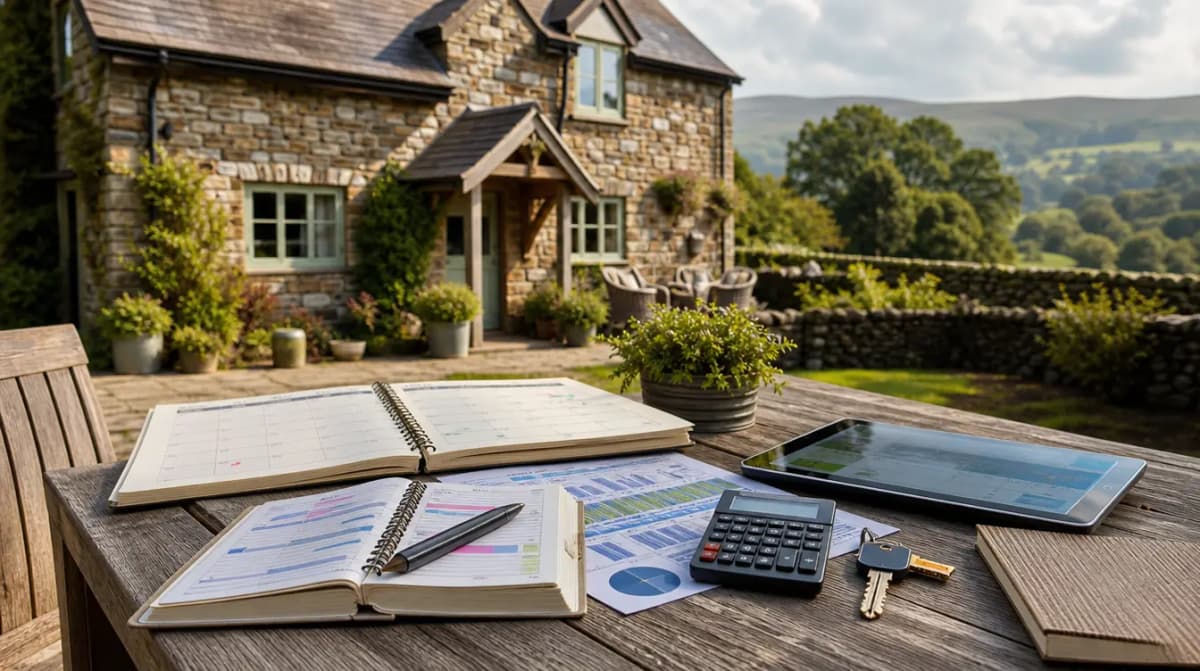
Almost every other acquisition in this category is a business that happens to occupy a building. A B&B for sale is a building you will live in that happens to generate income, and that inverts most of the normal buying logic. Your mortgage, your family, your commute and your business all resolve to the same postcode. It is a lifestyle decision with a spreadsheet attached, and the spreadsheet deserves as much attention as the view.
Start with the demand picture, because it is better than the sector's reputation suggests. The Office for National Statistics measured 100.9 million guest nights booked through Airbnb, Booking.com and Expedia across the UK in 2025, an 11.5% increase on 2024, across 10.2 million separate stays. Domestic guests accounted for 67.2% of those nights.
Read that two ways. Those platforms are your competition, since a spare room three streets away now sells into the same market you do. They are also your distribution: the overwhelming majority of small guest houses now take a substantial share of their bookings through exactly these channels. A seller who tells you they rely purely on repeat guests and a road sign is describing either a remarkable business or an inaccurate one.
The seasonality is stark and worth planning cash around. August produced 14.1 million guest nights, January 4.3 million. That is a three-to-one swing between the best and worst month, and it is the reason a B&B's annual accounts tell you much less than its monthly ones.
Nobody knows how many B&Bs there are
This is worth stating plainly because you will encounter confident numbers that do not survive scrutiny. VisitBritain, in its England Accommodation Stock Audit published in June 2026, puts it directly: it is difficult to know the exact size of the sector because there is no compulsory registration scheme for accommodation establishments in the UK.
Figures in the region of 25,000 UK B&Bs circulate widely. They trace back to insurer and marketing research rather than to any official count, and the most quoted version is now close to a decade old. Treat any sector-size claim in a sales particular with the scepticism it deserves, including one that flatters the business you are looking at.
What this means for a buyer is that comparables are thin and inconsistent. You will not find a published dataset of B&B sale prices the way you can for pubs or care homes. You are going to have to build your own view from the specific property in front of you, which the rest of this guide is about.
The tax change that reset the maths
If you are working from advice, spreadsheets or forum posts written before 2025, throw them out. The furnished holiday lettings regime, which gave qualifying short-term let properties a distinct and generous tax treatment, has been abolished.
Under the HMRC guidance, the furnished holiday lettings rules cease to apply for tax years beginning on or after 6 April 2025 for income tax and capital gains tax, and from 1 April 2025 for corporation tax. Income and gains from what was a furnished holiday let now form part of the ordinary UK or overseas property business and are treated in line with all other property income and gains.
That removes the separate calculation and reporting, and with it the specific reliefs the regime carried. For anyone modelling a purchase, the practical consequences are the ones to focus on: finance cost relief, capital allowances treatment and the capital gains position on eventual exit are all now governed by the general property rules rather than the old furnished holiday lettings ones.
A genuine B&B, where you live on site and serve breakfast, has never been quite the same animal as a self-catering holiday let, and the trading versus property distinction can matter a great deal to your tax position. It is one of the few areas where paying an accountant before you offer rather than after you complete is unambiguously worth it. Our guide to business asset disposal relief covers the exit side of that question.
Business rates or council tax
Which one you pay depends on how the property is assessed, and it changes your running costs materially. Rateable values below £12,000 attract 100% small business rate relief in England, tapering to nothing at £15,000.
Ask the seller which regime the property is on now, and ask the local authority what it would be under your intended use. Those can be different answers, and finding that out after completion is expensive.
What a B&B for sale is actually worth
There is no clean formula, and anyone offering you one is selling something. In practice the asking price is assembled from three components that a buyer needs to separate.
The residential value of the property. What would the building fetch as a house, in that location, in that condition? This is your floor and it is usually the largest component by some distance. It is also the number an estate agent can give you for free.
The trading value on top. What does the business add above bricks and mortar? This is where the multiple lives, and for owner-operated guest houses it is typically modest, because the earnings are heavily dependent on the owner's unpaid labour. Strip out a realistic wage for the hours actually worked and many small B&Bs are close to break-even as businesses. That is not a criticism of the sector, it is the sector.
Fixtures, fittings and stock. Usually valued separately and usually less than the particulars suggest.
The discipline that matters is refusing to let the three blur into one number. A guest house priced at £650,000 in a location where the house alone is worth £600,000 is asking £50,000 for the business. If it produces £30,000 of genuine post-wage profit, that is cheap. If it produces £8,000, it is not.
Our guide to how to value a business covers the framework, EBITDA adjustments covers the owner-wage adjustment specifically, and the 2026 multiples data gives you context for what small UK businesses are currently changing hands for.
Testing the occupancy claim
Occupancy is the number sellers round most generously, and it is straightforward to verify if you ask for the right things.
Get the raw data, not the story
Ask for the booking system exports, not a summary. Three years of raw reservation data, by room, by night, with rate achieved. Any modern property management system produces this in seconds. Reluctance is itself informative.
Reconcile against the platform accounts. Booking.com and Airbnb statements show commission paid, which back-calculates to revenue. If the platform statements and the declared turnover do not agree, ask why before you assume the worst, and ask again if the answer is vague.
Look at the shape of the year, not the total. Given the national pattern of an August peak more than three times the January trough, a business claiming smooth year-round occupancy is either genuinely exceptional, in an unusual location, or misdescribing itself. Exceptional is possible. Verify it.
Separate room revenue from everything else. Evening meals, bar, weddings and function hire carry different margins and different licensing requirements. A guest house whose profit comes from a function room is a hospitality venue in disguise, with the staffing model that implies.
Check the reviews yourself, going back three years. Review history is unusually honest in this sector, and a decline in scores eighteen months before a sale tells a story the accounts will not.
Then the compliance file
Get the fire risk assessment, gas safety and electrical certificates. Paying guests trigger obligations a private home does not. Ask for the current fire risk assessment and check when it was last reviewed.
The general due diligence process and our UK Business Buyer Starter Kit cover the rest, and the seller questions to work through are worth covering in full.
Funding, and the thing lenders care about
Mixed residential and commercial use makes funding more complicated than either alone. A standard residential mortgage will usually not cover a property being run as a business, and a commercial lender will look at the trading history you are buying, not the one you intend to create.
Expect to be asked how many rooms are let, whether the owner's accommodation is genuinely separable, and what proportion of the property's value is attributable to trade. Expect a larger deposit than a residential purchase. Expect the valuation to be done on a basis you may not like.
The one advantage you have is speed. Christie and Co puts hospitality deals at around five months from accepted offer to completion, the fastest of any sector it tracks, against an all-sector average of about seven months. There is no regulator to satisfy and no contract to novate. If you are organised, this is a quick transaction by small business standards.
Our guide to financing a business purchase covers the lender conversation in more detail.
Finding one worth buying
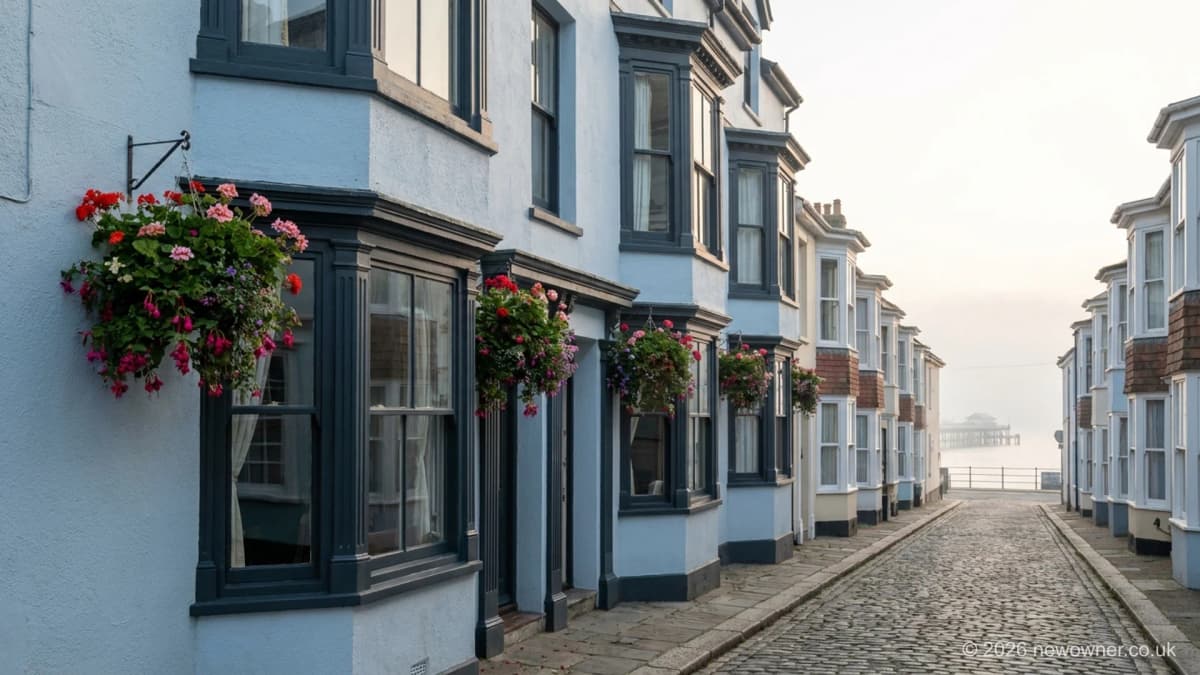
A B&B for sale can be listed by a business agent, a residential estate agent, or both at once, and the two describe the same property very differently. It is worth watching both, because a property listed as a house with letting potential is often priced on residential comparables while the same building marketed as a going concern carries a trading premium.
Set your search parameters honestly before you start: how many rooms you are prepared to service, whether you want separate owner accommodation, whether you can live somewhere seasonal, and what your realistic ceiling is once stamp duty, legal costs and a refurbishment budget are added.
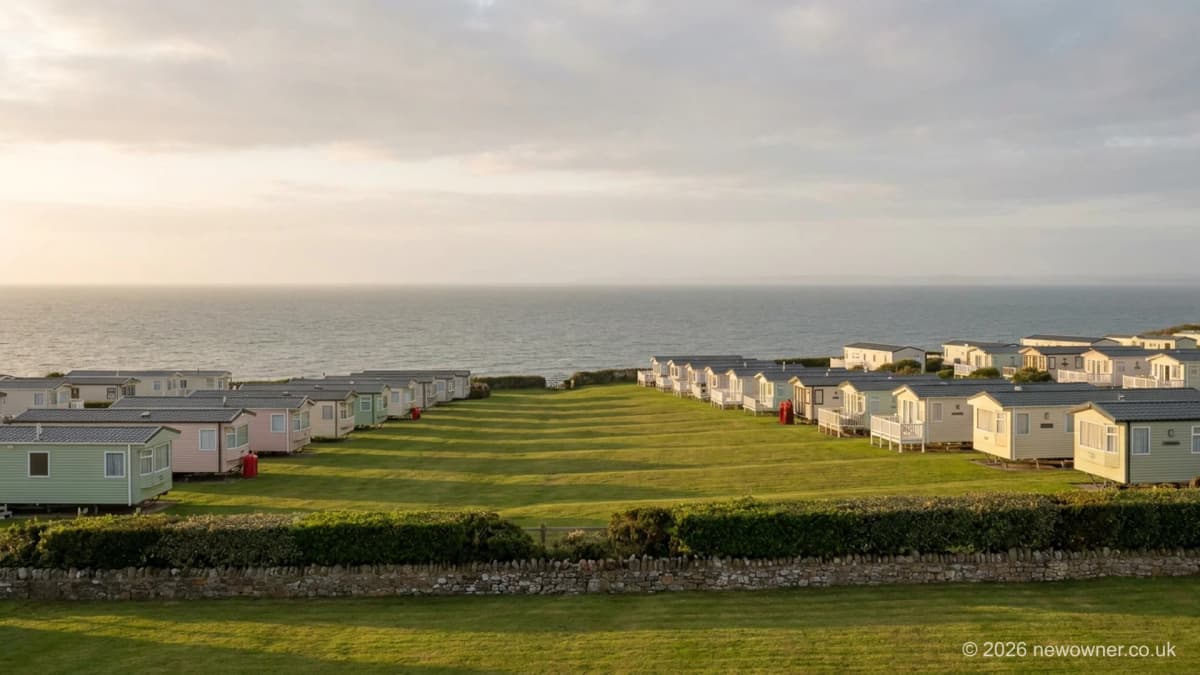
You can browse live business listings on NewOwner — including hospitality and guest house opportunities in Bristol, Scotland, and Edinburgh — and filter by sector and region. If you are weighing this against other property-led options, the holiday let business guide and the caravan park guide cover two sectors with a similar asset-plus-income structure. Our overview of how businesses come to market covers the channels.
If you already own a guest house and are considering an exit, benchmark your trading goodwill with our free UK Business Valuation Calculator, read about our zero-commission marketplace, or check the selling guide for what preparation genuinely moves the price.
The honest summary
Demand is not the problem. Short-term let guest nights across the UK grew 11.5% in 2025 to more than 100 million, and two thirds of that came from domestic guests who are not going to stop taking short breaks in Britain.
The problem, for buyers who get it wrong, is paying a trading premium for what is really a house, and underestimating how much of the reported profit is the current owner working for nothing. Value the building first. Value the business second, after a realistic wage. Verify the occupancy from the booking system rather than the brochure. And do the tax conversation before you offer, because the rules changed in April 2025 and the old assumptions no longer hold.