- The honest market you're selling into
- Freehold and leasehold are not the same business
- What buyers actually pay for
- The premises licence and the compliance file
- Before you sell a pub: what to fix in the year before
- Tax, structure and the property question
- A worked example: two paths for the same pub
- How to sell a pub: getting it done
The honest market you're selling into
If you want to sell a pub in 2026, start where most pub-selling guides won't.
UK pub numbers fell from 46,829 in 2020 to 44,656 in 2025, and the BBPA counted 161 closures in Q1 2026 alone, up 26% on the same quarter a year earlier. Roughly two a day.
Worth a caveat on those numbers: no single organisation counts every pub closure in Britain, and the various trackers measure slightly different things, so treat the trend as solid and the precise figures as approximate.
That's the backdrop. It does not mean your pub is unsellable. It means the market has become sharply two-tier, and which tier you're in determines almost everything about your sale.
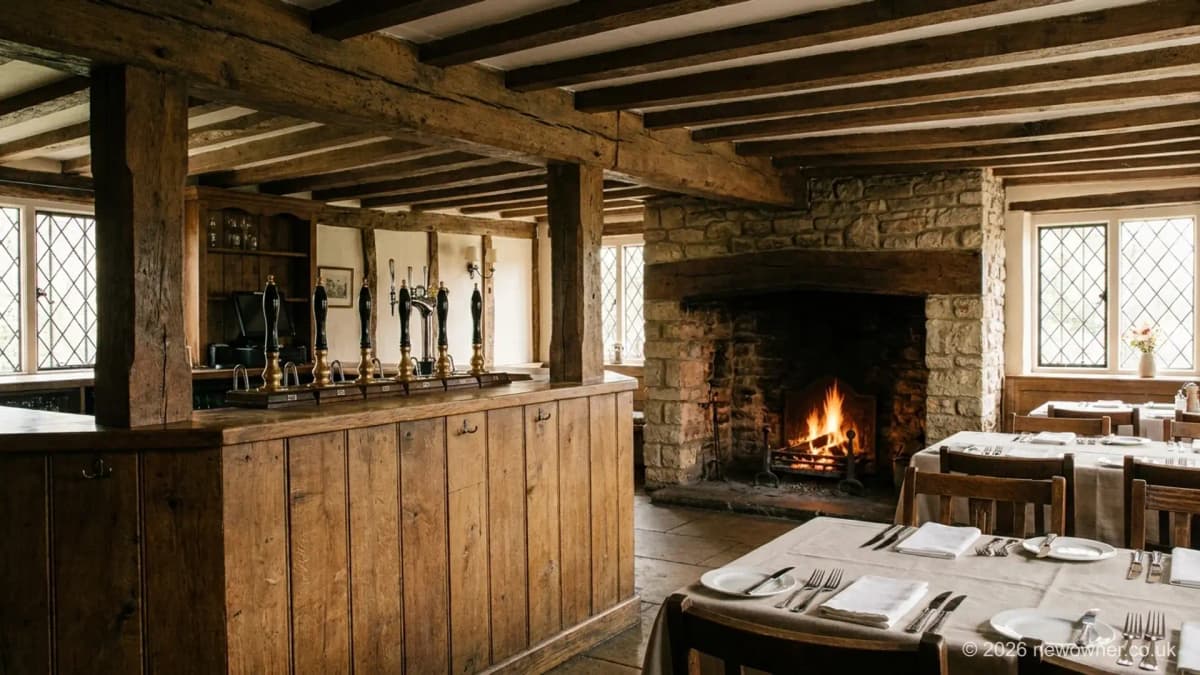
Tier one sells readily. Freehold, food-led or with accommodation, in a catchment with money, run by a team rather than by the licensee personally. Buyers compete for these: operators, small groups, and increasingly people who want a business with a home attached.
Tier two is hard. Wet-led leasehold on a tied agreement, in a weak catchment, where the trade is the landlord's personality. These sit on the market for a long time, and some don't sell as pubs at all.
Being honest with yourself about which you own is the single most useful thing you can do before you set a price. This guide covers what pubs actually sell for, why freehold and leasehold are completely different transactions, how the licence and any tie affect the deal, and what to fix before you market.
Freehold and leasehold are not the same business
They're valued differently, they attract different buyers, and confusing them is where most pub sellers go wrong.
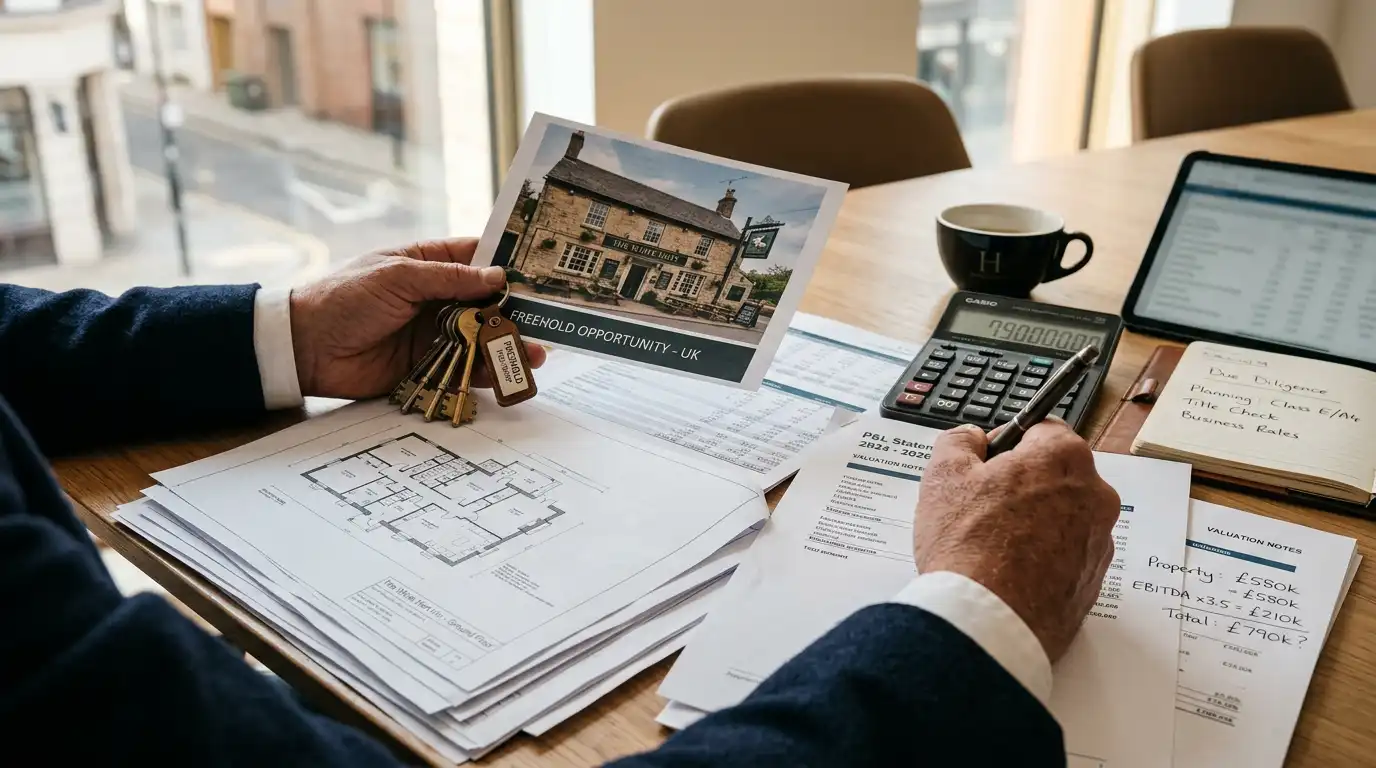
Freehold pubs (freehouses). You own the building and the business. Valuation is driven by the property, with the trade adding value on top. A specialist valuer will assess market value subject to trade, considering the fair maintainable trade a reasonably efficient operator could achieve, then apply a multiple appropriate to the location and format.
Typical range outside London and the South East: £250,000 to £900,000, with strong food-led destination pubs and those with letting rooms going well beyond. Buildings with development or conversion potential can be worth more than the pub business, and you should establish that before marketing rather than after.
Leasehold pubs. You're selling the remainder of a lease plus the trade, fixtures and goodwill. The price is a premium, and it can be anywhere from £15,000 to £150,000 depending on the trade, the lease terms and the rent. If the rent is above market or the tie is expensive, the premium can be nil, and some leasehold pubs change hands for the value of the stock and fixtures alone.
The tie. If you hold a tied lease with a pub company, you buy your beer from them at their prices in exchange for a lower rent. Buyers price the tie carefully, because it directly caps gross margin. If you're on a tied agreement, know whether the Market Rent Only option under the Pubs Code is available to you, since the answer affects both your own economics and what a buyer will pay.
The pub company's consent. A leasehold assignment needs the landlord's approval, and pub companies assess the incoming tenant's experience, funding and business plan. They can and do refuse. Speak to your business development manager early, informally, because discovering at heads of terms that your buyer won't be approved wastes months.
Our guide to freehold businesses for sale explains why owning the bricks changes both financing and the buyer pool.
What buyers actually pay for
Pub buyers underwrite three things: the property, the trade, and whether that trade survives your departure.
Turnover mix is the first thing they look at. A pub doing 70% wet sales in 2026 is a harder sell than one at 45% wet, 45% food and 10% accommodation. Food and rooms diversify revenue, use the building through the day, and attract a wider buyer pool. If you've never done food and the kitchen exists, that's upside a buyer will value but not pay you for.
Accommodation is the strongest single addition. Letting rooms generate high-margin revenue from an asset you already own and they materially raise the valuation. If you have unused rooms upstairs, the twelve months before a sale is the time to bring two or three into use.
Gross margin. Buyers will check your wet GP against the norms for your tie status. Free-of-tie pubs should be running considerably better margins than tied ones, and if yours isn't, they'll assume buying is poorly managed and price the fix.
The licensee problem. In a lot of pubs the trade is genuinely personal. Regulars come because of you. A buyer knows this and will discount for it, particularly in wet-led community pubs. You cannot eliminate it, but you can reduce it: build the team's profile, run events that belong to the pub rather than to you, get the social media and review presence into the pub's name, and be honest in the numbers about what proportion of trade is genuinely destination-based.
What they'll ask for. Three years of accounts, current management figures, till reports showing the wet/dry/accommodation split by month, supplier statements, the lease or title, the premises licence with its conditions and plan, food hygiene rating, staff contracts, and the tie arrangements in full.
Our business valuation guide covers how to normalise earnings, which in a pub means adjusting out your own accommodation, drinks, meals and vehicle before presenting a profit figure.
The premises licence and the compliance file
The alcohol licence is the legal foundation of your business, and it's cheap to get right and expensive to get wrong.
The premises licence attaches to the building and is transferred to the buyer by application to the licensing authority. The fee is modest, around £23, and the police have a short window to object. A buyer can apply for immediate effect so trading isn't interrupted, but only if the paperwork is correct on the day.
The Designated Premises Supervisor is the named individual responsible for alcohol sales, and a change of ownership means a DPS variation. The outgoing DPS has to consent, so if you're the DPS and the relationship sours, you hold a card you should not need to play.
A personal licence is required by whoever acts as DPS. It needs an accredited qualification, a DBS check and an application, so it takes weeks not days. Make sure your buyer knows this early.
What to check in your own file before you market:
- Read your licence, including all the conditions and the approved plan. Conditions added after a past review stay attached to the premises and a buyer will want to understand them.
- Confirm the permitted hours match the hours you actually trade. A pub trading beyond its permitted hours shows turnover a buyer cannot legally reproduce, and that discovery kills deals.
- Check whether the licence is subject to any review application, or whether the area is under a cumulative impact policy.
- Ask the licensing authority about complaint history. It costs nothing and it's better that you know first.
- Food hygiene rating. It's public, buyers check it, and anything below 4 invites questions about the whole operation.
Two other items that come up in every pub sale: gaming machine permissions, and any pavement or outdoor seating licence from the highway authority, which is not automatically transferable and can be withdrawn.
Asset of Community Value. If your pub has been listed as an ACV by the local community, a moratorium can apply when you come to sell, giving community groups a window to prepare a bid. It doesn't stop a sale but it affects timing, and you should know your status before you market.
Before you sell a pub: what to fix in the year before
The gap between a pub that sells in three months and one that sits for two years is mostly preparation.
The fixes that move the price
Add food, or fix the food. If the kitchen is dark, get it trading even at a simple level. If food is 20% of sales, work out why. A pub with a credible food offer reaches a much larger buyer pool, because most people looking to buy a pub in 2026 are planning a food-led business.
Open the rooms. Two or three letting rooms brought into use, listed on the usual booking platforms, produce high-margin revenue and add disproportionately to the valuation. This is the highest-return capital spend available in most pubs.
Get the accounts clean and normalised. In pubs specifically this means separating out your own living costs. Many publicans live above the pub, and the accounts blend personal and business spending in ways that make the true profit invisible. A buyer's lender cannot underwrite a number they can't see. Our normalised EBITDA guide explains how to present the adjustments credibly.
Reprice. Pub prices are often set by fear of losing regulars. Check yours against three comparable pubs in the area. On a wet GP that's already thin, a modest, well-communicated increase is worth more to your sale price than the volume it might cost.
Deal with the building. Cellar cooling, kitchen extraction, the roof, and anything a surveyor will flag. Buyers deduct more for deferred maintenance than it costs you to fix, and lenders will hold back funds against it.
Sort the tie question. If you're tied and the terms are poor, understand your Pubs Code options and take advice. A pub that comes with a clear route to free-of-tie trading is worth substantially more than one that doesn't.
Build the pub's own following. Reviews, social media and the mailing list in the pub's name, not yours. It sounds cosmetic. It's the evidence that the trade transfers.
Tax, structure and the property question
Business Asset Disposal Relief is now less generous than it was. GOV.UK confirms 10% for disposals on or before 5 April 2025, 14% between 6 April 2025 and 5 April 2026, and 18% from 6 April 2026, with a £1m lifetime limit.
For a freehouse sale the gains often approach or exceed that limit, so model the tax before you agree a price rather than discovering it afterwards. If the pub is owned jointly, each owner has their own £1m limit.
Living accommodation matters here in a way it doesn't in other sectors. If you live in the pub, part of the property may be treated as your main residence, which affects the capital gains position on that portion. This is genuinely complex, it interacts with BADR, and it's worth an accountant's time well before completion.
Asset sale or share sale. Most freehouse sales are property-plus-business asset transactions. Where the pub trades through a limited company that also owns the freehold, a share sale may suit both sides, but the buyer will want extensive warranties. Take advice on which structure leaves you better off after tax, because the difference is frequently larger than the last round of price negotiation.
Stock at valuation. Cellar stock, spirits and food are counted and paid for separately on completion day by an independent stocktaker. In a pub this is a real number, often several thousand pounds.
VAT and TOGC. Where a pub is sold as a going concern, the transaction may qualify as a Transfer of a Going Concern and fall outside VAT. Getting this wrong is expensive, and the conditions are specific. Flag it to your solicitor early.
Our Business Asset Disposal Relief guide sets out the qualifying conditions in detail.
A worked example: two paths for the same pub
This worked example is an illustrative composite built from typical market figures, not a record of a specific transaction.
A freehold village pub, wet-led, four unused letting rooms upstairs, licensee and partner running it themselves and living on site.
Starting position:
| Line | Annual | Notes |
|---|---|---|
| Wet sales | £248,000 | 84% of turnover |
| Food sales | £47,000 | Limited menu, weekends only |
| Turnover | £295,000 | |
| Cost of sales | £112,000 | Wet GP 62%, below the free-of-tie norm |
| Staff (excluding owners) | £74,000 | |
| Rates, energy, insurance, repairs | £58,000 | |
| Owner's earnings | £51,000 | Two people working full time |
The first valuation. A wet-led pub with £51,000 of earnings supporting two people isn't a business a buyer can employ managers to run. Priced essentially on the property, with a small premium for trade: around £420,000.
What eighteen months changed.
Rooms. £54,000 spent bringing four letting rooms up to a lettable standard with en-suites. At 55% occupancy and £85 a night, that's roughly £68,000 of income at very high margin.
Food. A proper kitchen hire and a focused menu, seven days. Food sales went from £47,000 to £163,000, at around 65% gross margin.
Buying. Renegotiated supply and repriced the wet range. Wet GP moved from 62% to 68%.
People. A manager and a chef employed, so the owners moved to overseeing rather than working every shift.
Rebuilt position: turnover £487,000, and after a full management team including a chef and a manager on market salaries, EBITDA of around £96,000.
That pub sold for £810,000. The property hadn't changed. What changed was that it became a business someone could buy and employ people to run, rather than a job for a couple.
£54,000 of capital and eighteen months of work produced roughly £390,000 of additional value. That's the pub market in 2026 in one example: the wet-led owner-operated model is what's closing, and the diversified, managed model is what buyers want.
How to sell a pub: getting it done
Who buys pubs. Experienced multi-site operators, who want food-led freeholds with accommodation and pay the best prices. First-time licensees, usually buying leaseholds or smaller freehouses, often underestimating the work. Small local groups adding a second or third site. And property buyers, where the building has alternative use value.
That last group matters. If your pub sits on a plot with residential conversion potential, get planning advice before you market. Selling a pub at a trade price when the site is worth more for housing is an expensive mistake, and one that's easy to make.
Specialist agents. Pubs are one of the sectors where specialist agents genuinely add value, because they hold the operator relationships and understand fair maintainable trade. Fees run 1.5% to 3% on freeholds. For a small leasehold premium, that maths changes and a direct listing usually makes more sense.
Timing. Market in spring, with a good summer ahead in your forward figures and the accounts showing a full year. Pubs shown in February with the winter trade in the numbers look worse than the same pub in May.
Presentation. Buyers judge pubs emotionally more than any other business in this series. The car park, the garden, the cellar, the toilets. Two thousand pounds of paint and tidying changes viewings substantially.
Confidentiality. Staff and regulars finding out early is a real risk in a community pub, where news travels in a night. NDA before financials, and no address in the initial listing.
Be realistic about the timeline. Six to eighteen months is normal for a pub, and longer at the difficult end of the market. Price it honestly at the start, because a pub that's been listed for a year develops a reputation of its own and buyers ask why.
When you're ready to sell a pub, you can list it on NewOwner and deal with buyers directly, see the pricing here, or read our comparison of selling direct versus using a broker. To talk through where your pub sits before committing to a route, get in touch.
Ready to sell your business?
Get Started