- Garages sell well, and most owners undersell them
- What a garage business is worth
- Protecting the DVSA approval through the sale
- Your technicians are the deal
- How to sell a garage business for more: what to fix first
- Tax and structure
- A worked example: pricing a two-ramp garage
- Where to sell a garage business: route, timing and confidentiality
Garages sell well, and most owners undersell them
If you want to sell a garage business in the UK, you're holding an asset with better fundamentals than almost anything else on the small-business market. Owners routinely price it as if that weren't true.
The demand behind your business is legally mandated. An MOT isn't discretionary spending, the UK car parc is around 35.8 million cars, and the average age of those cars is over nine years and rising. Older cars need more work, and when money is tight people repair rather than replace. That's a rare quality in a small business, and buyers with any experience know it.
There are barriers to entry too, which is what really supports the price. DVSA's published list of active MOT test stations contains 23,087 sites. You can't simply open a competing one: you need premises with the right planning use, DVSA authorisation, calibrated equipment and qualified people.
Look at the Class 7 figure. Only 6,231 stations, 27% of the total, are authorised to test vans, in a country where van traffic keeps growing. If you hold Class 7, that's a genuinely scarce authorisation and it belongs at the top of your listing, not in a footnote.
Where owners lose money is simpler than they think. They price on what they take home, and what they take home is mostly a wage for turning a spanner. The buyer isn't paying for your labour, they're paying for what the business earns without you. This guide covers what garages actually sell for, how to protect the DVSA approval through a sale, why your testers decide the price, and what to fix before you list. For the buyer's view of the same deal, see our guide to buying an MOT garage.
What a garage business is worth
Garages sit at the higher end of small-business multiples, and the reason is the barriers described above.
Leasehold garages with an MOT bay typically sell for £60,000 to £250,000, at 2x to 3.5x seller's discretionary earnings.
Larger operations with employed management move to EBITDA, at 3x to 4.5x.
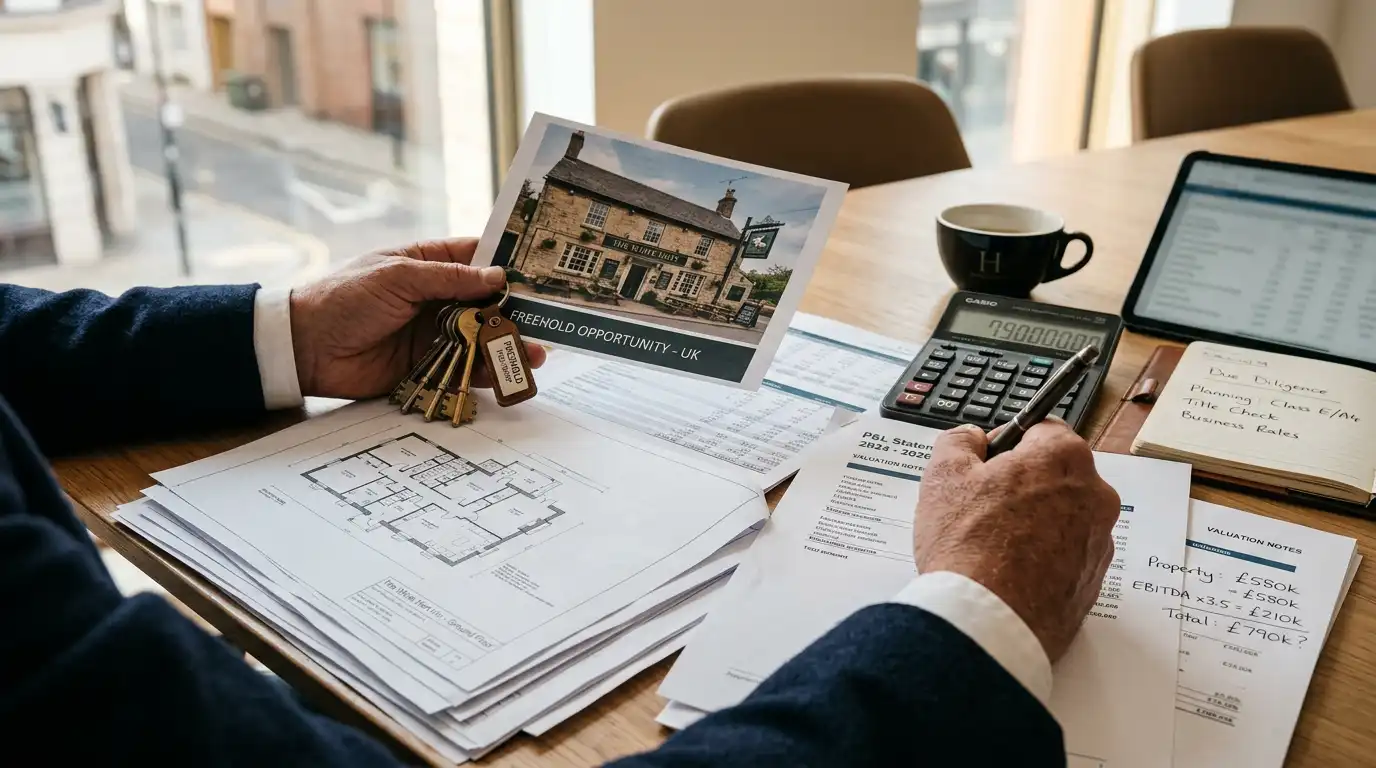
Freehold garages are a different transaction. You're selling industrial or commercial property plus a business, so £400,000 to £1.2m is normal outside London and considerably more in the South East. Get the property valued separately by a commercial surveyor, because the two components attract different buyers and sometimes the land is worth more than the trade. Our guide to freehold businesses explains how that changes both the buyer pool and the financing.
Notice what dominates. Testers and premises, not turnover, not even EV readiness. Every conversation about price in this sector comes back to whether the workshop still functions after you leave.
The equipment matters too, and it's worth listing properly. A full Class 4 MOT bay costs £25,000 to £45,000 new. Ramps run £3,000 to £9,000 each installed. Diagnostic kit and manufacturer software subscriptions can be several thousand a year. Buyers will want the age and condition of everything, plus current calibration certificates for the brake tester, headlamp aligner and emissions analyser. Out-of-date calibration is a price deduction and, worse, a signal that the business isn't tightly run.
Our normalised EBITDA guide covers how to present adjusted earnings so a buyer's lender can underwrite them.
Protecting the DVSA approval through the sale
This is the part unique to your sector, and getting it wrong can cost you weeks of lost trading and a chunk of the price.
The approval belongs to the Authorised Examiner, not the building. That single fact drives the deal structure.
In a share sale, the buyer acquires the company that holds the Vehicle Testing Station approval. The legal entity is unchanged, so the approval continues. DVSA must be notified of the change in directors and will assess whether they're fit and proper, but the garage keeps testing throughout. It also keeps its site history and its rating.
In an asset sale, the buyer trades through a different entity and needs a fresh Authorised Examiner application for the site. That means a DVSA assessment of the premises, equipment and people, and it takes weeks. A garage that can't test for six weeks after completion loses its diagnostic funnel and some of its customer base.
So: a share sale protects the thing that makes your garage valuable. Buyers often instinctively prefer asset purchases to avoid inheriting company history. In this sector, push back, and price the difference. A well-advised buyer will understand why.
Practical steps for a seller:
- Decide share sale or asset sale early, and take advice on the tax consequences of each before heads of terms.
- If it has to be an asset sale, start the buyer's AE application before completion so the gap is as short as possible.
- Have your DVSA site review history to hand. Buyers will ask, and volunteering it looks a great deal better than being asked twice.
- Make sure calibration certificates are current and won't expire mid-deal.
- Confirm in writing which of your qualified testers intend to stay, because the buyer will need at least one from day one.
If your business has any disciplinary history with DVSA, disclose it early. It will surface, and a buyer who discovers it late will either re-trade the price or walk.
Your technicians are the deal
The motor trade has a well-documented skills shortage. That works in your favour when you own a garage with a good team, and against you if your team leaves with you.
The tester problem. An MOT tester needs a specific qualification, DVSA approval, and annual training and assessment. If you are the only qualified tester and you're retiring, the buyer inherits a test station that legally cannot test. That's not a discount, it's a deal-breaker for many buyers.
If that describes you, fix it before you sell. Getting an existing technician through their tester qualification costs a few thousand pounds and some weeks. It's the highest-return spend available to you, because it converts an unsellable business into a sellable one.
What buyers will ask. Who's employed, on what terms, how long they've been there, what notice they owe, and whether they're staying. Experienced diagnostic technicians can command £38,000 to £48,000, and MOT-qualified staff carry a premium, so a buyer is also checking whether your payroll is realistic or whether they'll face an immediate wage correction.
The owner-technician trap. In most small garages the owner is the best technician and the person customers ask for by name. That labour has to be replaced, and its cost comes out of the earnings before any multiple is applied. If you bill 40% of the workshop's hours yourself, be honest about it in your numbers rather than letting the buyer discover it. Sellers who present a clear "here's what it earns with a replacement technician on the payroll" figure get taken more seriously and, oddly, argue less about price.
A structure that works. Offer to stay for three to six months after completion, and consider tying part of the price to your key technicians remaining twelve months. It sounds like you're giving something away. In practice it lets a nervous buyer pay more, because you've removed the risk they were pricing.
How to sell a garage business for more: what to fix first
Garages are usually run by mechanics, which means the workshop is excellent and the commercial side has been ignored for a decade. That gap is your opportunity, because the fixes are cheap and they compound into the price.
The fixes in order of return
Get a second tester qualified. Covered above, and it's first for a reason.
Build recurring revenue. Service plans paid by monthly direct debit, and local fleet contracts with vans, taxis, driving schools and care providers. Contracted, invoiced, scheduled work is worth a materially higher multiple than passing trade, because a buyer can forecast it. A garage with 200 households on service plans and two fleet accounts is a different asset from one relying on whoever drives past.
Put the diary online. Many independents still take bookings only by phone, during working hours, from someone who is under a car. Online booking captures evening enquiries you currently lose, and it produces the customer data a buyer wants to see.
Turn MOTs into relationships. Every test is a named customer with a known vehicle. An automated reminder at eleven months, plus a service reminder at the right mileage, lifts repeat rates measurably and costs almost nothing. Buyers can see the retention in your management system.
Price the labour rate properly. Independents are chronically underpriced against main dealers. Moving from £65 to £72 an hour is roughly a 10% rise on your highest-margin line, and customers already paying half a dealer rate rarely leave over it. Do it twelve months before you sell so the buyer sees it in the accounts rather than as a promise.
Tidy the premises and the paperwork. Waste oil handling and the environmental permit, employer's liability insurance, COSHH, equipment finance documented, and the workshop actually clean on viewing day. First impressions in this sector are worth real money.
Our key steps to selling a business covers the general process, and common seller mistakes is worth reading before you start.
Tax and structure
The share sale versus asset sale decision matters more here than in most sectors, because of the DVSA approval, and the tax outcomes differ sharply.
Business Asset Disposal Relief is now less generous. GOV.UK confirms 10% for disposals on or before 5 April 2025, 14% between 6 April 2025 and 5 April 2026, and 18% from 6 April 2026, against a £1m lifetime limit. On a £400,000 qualifying gain that's £72,000 of tax rather than the £40,000 it would have been under the old rate.
For a share sale you generally need at least 5% of ordinary share capital and voting rights, plus an officer or employee role, held for two years before disposal. For a sole trader or partnership selling the whole business, the two-year trading condition applies instead.
If you own the freehold personally and the company trades from it, you're in associated-disposal territory. The relief can apply to the property disposal alongside the business disposal, but the conditions are fiddly and rent charged to the company can restrict the relief. This is genuinely worth an accountant's time well before you market the business, because the numbers involved are large and the mistakes are permanent.
Plant and machinery. In an asset sale, the allocation of price between goodwill, property, and plant and equipment affects both sides' tax. Buyers want more allocated to plant for capital allowances; that allocation can create a balancing charge for you. Negotiate it deliberately rather than leaving it to the lawyers at the end.
Stock and work in progress are usually handled separately at completion, and in a garage the parts stock can be a meaningful number.
Our Business Asset Disposal Relief guide sets out the qualifying conditions in detail. Get advice before heads of terms rather than after, because structure decisions get very expensive to unwind.
A worked example: pricing a two-ramp garage
This worked example is an illustrative composite built from typical market figures, not a record of a specific transaction.
A leasehold garage on a small industrial estate. Two ramps plus an MOT bay, two employed technicians, owner working full time as the MOT tester and lead diagnostic technician. Eight years unexpired at £22,000 a year.
The trading position:
| Line | Annual | Notes |
|---|---|---|
| Labour sales | £218,000 | 52% of turnover |
| Parts sales | £164,000 | Marked up 31% |
| MOT fees | £38,000 | About 750 tests |
| Turnover | £420,000 | |
| Parts cost | £125,000 | |
| Technician wages inc. NI and pension | £96,000 | Two staff |
| Rent | £22,000 | |
| Rates, energy, insurance, software, waste oil | £41,000 | |
| Calibration, tooling, sundries | £14,000 | |
| Owner's earnings (SDE) | £122,000 |
The owner's expectation was 3x SDE, so £366,000.
The three adjustments a buyer made.
The owner is the only qualified tester. Replacing him needs an MOT-qualified technician at about £42,000 including on-costs. Earnings for an owner who manages rather than turns a spanner: roughly £80,000.
Equipment. The brake tester was 14 years old and the emissions analyser due for replacement. Around £18,000 of capital inside two years.
Structure. The seller wanted an asset sale for tax reasons. That meant a fresh Authorised Examiner application and a likely six-week gap in testing, which the buyer priced at roughly £15,000 of lost margin and disruption.
Where it landed initially. £80,000 of manager-adjusted earnings at 2.5x is £200,000, less £18,000 capex and £15,000 of approval disruption. Around £167,000, against an expectation of £366,000.
What changed it. The seller spent nine months doing three things: putting his lead technician through the MOT tester qualification, signing two local van fleets onto contracts worth £46,000 a year, and agreeing to a share sale after taking tax advice.
Rebuilt: earnings without the owner around £94,000, no approval gap, contracted fleet revenue a buyer could forecast, and two qualified testers staying. That sold at 3x, so £282,000, with 15% deferred against the testers remaining twelve months.
Not the £366,000 he first wanted. But £115,000 more than the market would have paid nine months earlier, for one qualification and two contracts.
Where to sell a garage business: route, timing and confidentiality
Who buys garages. Three groups, and they pay differently. Working technicians buying their own site, usually under £250,000 and often financing with a loan against the equipment and a personal deposit. Small local groups adding a second or third site, who value your Class 7 authorisation and your testers and will pay the most. And property buyers where the freehold carries development potential, who barely care about the trade at all.
If you own the freehold, get it valued independently before you market. Selling a garage at a business multiple when the land is worth more is the most expensive mistake available in this sector.
Timing. Garages trade steadily year-round, but the accounts look best after a full winter, and buyers borrowing money move faster in the first half of the year. Nine to twelve months of preparation, then three to nine months to complete, is a realistic plan.
Confidentiality. Your technicians are the asset, so they must not hear about the sale from a customer. NDA before anything identifying goes out, no address in the initial listing, viewings after hours or on the pretext of a supplier visit. Tell your key people once you have heads of terms and a buyer you believe in, and give them a reason to stay.
The pack a buyer wants. Three years of accounts plus current management figures, a normalised earnings statement, the DVSA approval details and site review history, equipment schedule with calibration dates, the lease or property title, employment contracts with qualifications listed, fleet and service-plan contracts, and a customer retention report from your management system.
When you're ready to sell a garage business, you can list it on NewOwner and speak to buyers directly rather than through a broker taking 5% to 10%. The pricing is here, our comparison of selling direct versus using a broker is honest about where each works, and if you want to talk through your own position first, get in touch.
Ready to sell your business?
Get Started