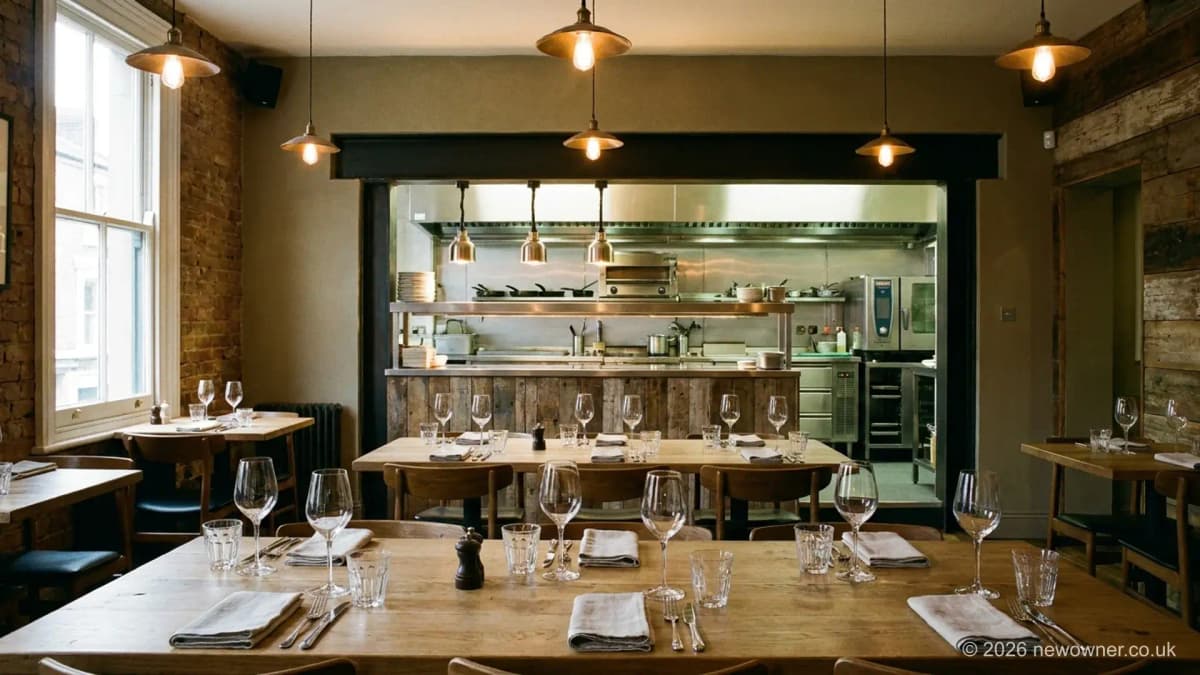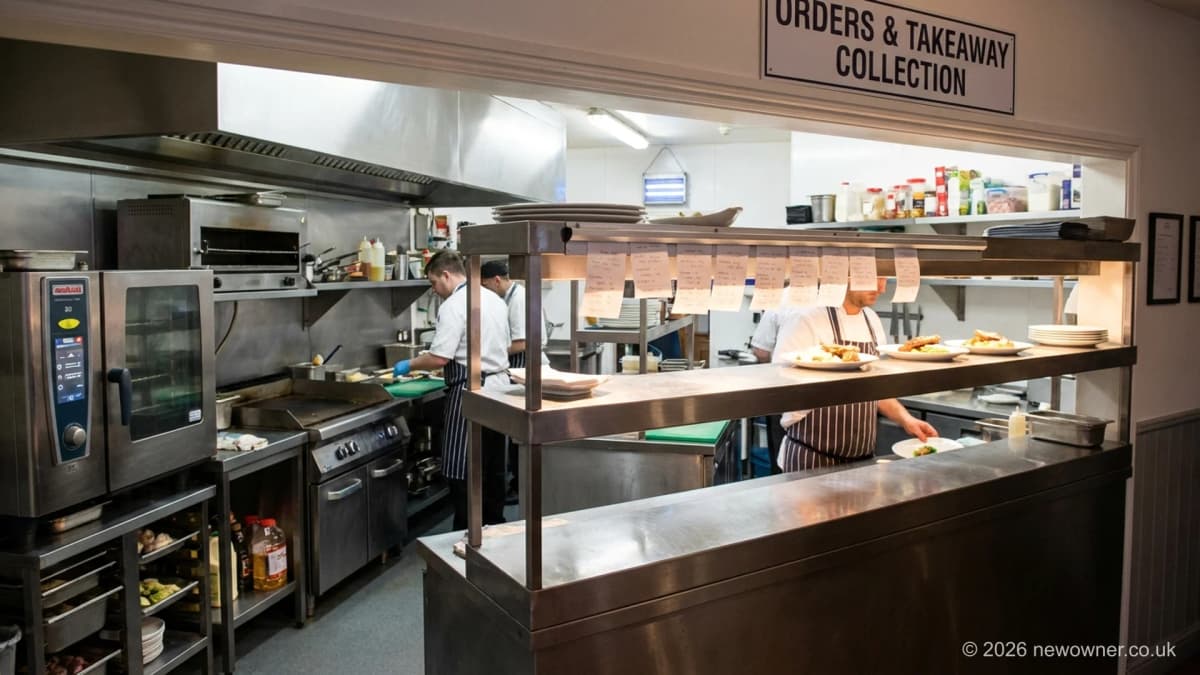
UK hospitality businesses trade across a wide spectrum, from modest £15,000 takeaway lease assignments to prime £750,000 licensed restaurants.
- What is the UK restaurant and takeaway transaction market?
- What are commercial lease terms: premium, assignment, and rent review?
- How to check turnover: cash, card, and delivery platform statements?
- What are the rules for licences and inspection: food hygiene ratings and premises licensing?
- Takeaway franchises: buying an established franchise resale
- Valuation and pricing: what food businesses actually sell for
- Due diligence checklist: auditing the physical and legal operation
- How to manage staffing and retention after a food business acquisition?
- How to find a restaurant for sale UK and complete the acquisition
What is the UK restaurant and takeaway transaction market?
When looking for a restaurant for sale UK, the food service sector remains the most heavily traded category in the small business market. It accounts for roughly one in four business listings nationwide. On NewOwner alone, catering represents the single largest operational cohort. Opportunities range from £10,000 takeaway lease assignments in provincial market towns up to £750,000 freehold licensed restaurants in London and Edinburgh.
This price spectrum reflects two very different transactions sharing the same heading. At the lower end of a takeaway for sale, you're buying commercial kitchen equipment, existing planning consent, and the unexpired term of a commercial lease. At the upper end, when you buy a restaurant UK, you're acquiring a proven brand, a loyal customer base, a transferrable Premises Licence, and an established trading history producing verifiable operating profit.
Between these extremes is a market undergoing structural change. High street footfall shifts, utility price adjustments, and the normalization of delivery aggregators have separated food businesses into two distinct economic models. First, high-turnover, low-footprint delivery and takeaway units (QSR). Second, destination licensed restaurants where guest experience drives the spend per head. Getting through this sector requires knowing that you're rarely buying a profit-and-loss account alone. You're primarily negotiating property rights, supplier contracts, and regulatory licences.
Why buy a restaurant business for sale?
A food business acquisition offers immediate cash flow compared to fitting out a new shell unit. Starting from scratch requires expensive planning applications for commercial extraction, prolonged fit-out periods, and building a customer base from zero. Buying an existing operation bypasses these delays, letting you trade from day one.
What are commercial lease terms: premium, assignment, and rent review?
Nine out of ten UK restaurants and takeaways trade on leasehold premises. In a leasehold acquisition, the commercial lease isn't just an overhead; it's the core asset and the primary source of legal risk.
The leasehold premium versus trade goodwill
When a seller asks £60,000 for a takeaway producing negligible taxable profit, buyers ask what they're paying for. Usually, the asking price represents a leasehold premium rather than genuine commercial goodwill. A leasehold premium is the market value of acquiring an established site with hot-food takeaway planning consent, an installed extraction system, three-phase electricity, and a passing rent below current market rates.
By contrast, goodwill means the expectation that customers will return regardless of who stands behind the counter. Confusing the two leads buyers to overpay for trade that evaporates the day the previous owner leaves.
How does the assignment process and landlord consent work?
Acquiring an existing lease requires a formal Licence to Assign from the landlord. Under the Landlord and Tenant Act 1927, a landlord can't unreasonably withhold consent, but they're fully entitled to scrutinise your financial standing. Typical landlord requirements include:
- Bank references and proof of funds: Showing sufficient liquidity to cover the acquisition, working capital, and at least six months of trading overheads.
- A commercial rent deposit: Usually between three and six months' rent, held in escrow for the duration of your tenancy.
- Authorised Guarantee Agreements (AGA): In leases granted after 1 January 1996, the outgoing tenant remains liable as a guarantor if you default. If your financial covenant is perceived as weaker than the seller's, the landlord might demand an additional personal guarantor or a larger cash deposit.
What about rent reviews and unexpired terms?
Check the lease schedule for rent review dates. Most UK commercial leases feature upward-only rent reviews every three to five years, pegged either to Open Market Value (OMV) or the Retail Price Index (RPI). If a site hasn't had a rent review in four years and the local high street has seen rents rise by 20%, an immediate rent spike will hit your cash flow shortly after completion.
Equally critical is the remaining lease term. A business with fewer than five years remaining on its lease is unmortgageable and difficult to resell unless you secure an extension or reversionary lease upfront. Always verify whether the lease sits inside or outside the protection of the Landlord and Tenant Act 1954 (specifically Sections 24 to 28). Leases contracted outside the Act give you no statutory right to renew when the term expires, meaning the landlord can repossess the premises without compensation.
How to check turnover: cash, card, and delivery platform statements?
Food businesses are traditionally cash-intensive, which makes them fertile ground for misleading sales particulars. When evaluating turnover, verbal assurances from the seller carry zero evidentiary weight. Every pound of claimed revenue must be reconciled across three independent sources: till data, card settlement summaries, and filed tax returns.
| Source Line | Verification Document | Red Flags to Scrutinise |
|---|---|---|
| Walk-in Cash | Consecutive daily EPOS Z-readings (12 months) | Large round-number cash entries; cash takings that don't correlate with banking slips. |
| In-Store Cards | Merchant acquirer monthly statements (Worldpay, Stripe, etc.) | Total monthly settlement volume lower than EPOS card reports; seasonal dips concealed in averages. |
| Aggregators | Native portal payout exports (Deliveroo, Just Eat, Uber Eats) | High gross sales masking 25%–35% commission deductions; promotions funded by merchant. |
| Filed Tax | HMRC Form VAT 100 and annual company accounts | Declared box 6 turnover lower than combined EPOS and aggregator sales reports. |
The delivery platform commission reality
In many urban takeaways, delivery aggregators account for 40% to 70% of gross takings. This changes the underlying economics of the kitchen. While a walk-in customer paying £15 generates a high gross profit margin (typically 65% to 70% after food costs), that same order placed via Deliveroo or Just Eat incurs a platform commission between 25% and 35% plus VAT, alongside packaging costs of 3% to 5%.
| Order Line Item | Value / Deductions | % of Gross | Operator Economic Reality |
|---|---|---|---|
| Gross Order Value | £15.00 | 100.0% | Customer checkout basket subtotal |
| Direct Food Ingredients (COGS) | -£4.50 | 30.0% | Wholesale ingredient raw food cost |
| Specialised Delivery Packaging | -£0.60 | 4.0% | Foil containers, bag, thermal seal |
| Delivery Commission | -£5.40 | 36.0% | 30% commission + 20% statutory VAT on fee |
| Net Retained Cash | £4.50 | 30.0% | Operating margin before wages, rent and utilities |
A takeaway turning over £10,000 a week predominantly through delivery platforms often yields less net operating profit than a neighbourhood shop turning over £5,000 a week in direct over-the-counter sales. Demand direct access to the merchant back-end of all delivery accounts during due diligence to verify payout net of refunds, customer service adjustments, and marketing deductions.
What are the rules for licences and inspection: food hygiene ratings and premises licensing?
A restaurant or takeaway can't trade without its regulatory permissions intact. Assuming that existing operating licences transfer seamlessly is one of the costliest errors an acquirer can make.
How does the Food Hygiene Rating Scheme (FHRS) affect the sale?
Local authority Environmental Health Officers (EHOs) inspect food premises across three pillars: hygienic food handling, physical condition of the facilities, and food safety management systems (HACCP documentation). Ratings from zero to five are published on the Food Standards Agency register.
- Rating 5 (Very Good): Clean operational history with up-to-date Safer Food, Better Business (SFBB) documentation.
- Rating 3 or 4 (Generally Satisfactory / Good): Minor structural or record-keeping improvements required.
- Rating 0, 1, or 2 (Urgent / Major Improvement Necessary): Serious structural non-compliance, pest issues, or failing refrigeration. In Wales and Northern Ireland, displaying the sticker is legally mandatory; in England, while display isn't yet statutory, poor ratings ruin delivery aggregator ranking algorithms.
Remember that food hygiene ratings don't transfer to a new owner. When you acquire the business, you must register as a new food business operator with the local authority at least 28 days before trading. The council will inspect your operation afresh. If the previous owner achieved a 4-star rating while deferring £15,000 of necessary duct cleaning, floor repairs, and pest proofing, those enforcement notices will fall on you.
What are the rules for Premises Licences and Late Night Refreshment?
Under the Licensing Act 2003, selling alcohol or serving hot food and hot drinks between 23:00 and 05:00 requires a Premises Licence issued by the local licensing authority.
- Late Night Refreshment (LNR): Essential for takeaways serving late-night trade. If a seller operates until 02:00 AM on weekends without an LNR licence, that trading volume is illegal and can't be counted toward sustainable earnings.
- Premises Licence Transfer: Requires written consent from the existing licence holder and an application to the local licensing department with police notification. Transfers cost £23 and are usually straightforward unless the police object on crime prevention grounds.
- Designated Premises Supervisor (DPS): If alcohol is sold, you or an appointed manager must hold a personal licence and be named as the DPS on the premises schedule.
Planning use class and commercial extraction
Commercial kitchens produce grease, smoke, and odour that require statutory consent. Confirm that the property holds proper planning permission under Class E (commercial, business and service) for dining, or Sui Generis for standalone hot-food takeaways. Also inspect the extraction flue: does it run to the roof eaves, does it comply with DEFRA kitchen extraction guidance, and is it covered by an active planning consent? An unauthorized extraction system subject to neighbour noise or odour complaints can result in an Environmental Protection Act abatement notice that halts trading overnight.
Takeaway franchises: buying an established franchise resale
A notable share of UK takeaway listings are franchise resales (such as Subway, Papa Johns, German Doner Kebab, or regional pizza concepts). Buying an operating franchise offers an established operational blueprint, brand awareness, and group purchasing power, but introduces a third party with unilateral approval powers.
Franchisor approval and transfer fees
You can't simply agree a price with the seller and complete the purchase. The franchisor holds the right of veto over any prospective franchisee. You'll undergo the franchisor's full assessment process, including credit checks, personal interviews, and mandatory training programmes (often costing £2,500 to £10,000, payable by the buyer).
On top of this, most franchise agreements impose a resale transfer fee (frequently £5,000 to £15,000 or a percentage of the purchase price) to cover the franchisor's legal and onboarding expenses. Clarify early in negotiations whether the buyer or the seller pays this fee.
Unit economics under franchise constraints
Franchised outlets must be modelled differently from independent takeaways:
- Ongoing Royalty Fees: Typically 5% to 8% of gross turnover, deducted before you pay operating expenses.
- National Marketing Fund: An additional 2% to 4% of gross sales paid into the central brand marketing budget.
- Tied Supply Chains: Franchisees must purchase ingredients, packaging, and uniforms from designated approved distributors. While this guarantees consistency, it prevents you from shopping around for cheaper wholesale alternatives during inflation spikes.
- Mandatory Refurbishment Cycles: Franchise agreements mandate brand store refreshes every five to seven years. If the store you're buying is due for an equipment update or interior refit, you might face an immediate £30,000 to £80,000 capital expenditure commitment dictated by the franchisor.
Valuation and pricing: what food businesses actually sell for
Food service businesses are valued primarily on Adjusted Net Profit (Seller's Discretionary Earnings - SDE) for owner-managed units, or EBITDA for managed operations, with asset values providing a baseline floor.
| Business Type | Typical Asking Range | Valuation Benchmark | Key Value Drivers |
|---|---|---|---|
| Independent Takeaway | £25,000 – £120,000 | 1.0x – 2.0x SDE + Equipment | High cash ratio, long unexpired lease, low delivery platform dependency, 4+ star FHRS. |
| Fish and Chip Shop | £60,000 – £250,000 | 1.8x – 2.5x SDE (or 15–20x weekly takings) | Condition of frying range (gas vs electric), fryer skill retention, loyal neighbourhood customer base. |
| Fast-Food Franchise | £120,000 – £450,000 | 2.5x – 3.5x EBITDA | Remaining franchise agreement term, compliance score, brand market share, delivery integration. |
| Casual Dining Restaurant | £75,000 – £350,000 | 1.5x – 2.5x SDE | Alcohol sales mix (>25% gross profit driver), covers capacity, outdoor seating licence, premises licence terms. |
| Prime Central Restaurant | £300,000 – £750,000+ | 3.0x – 5.0x EBITDA | Transferrable brand equity, secondary management structure, favourable rent-to-turnover ratio (<12%). |
Hospitality acquisition decision gates
| Acquisition Stage | Critical Audit Verification | Deal Decision & Legal Remedy |
|---|---|---|
| 1. Revenue Integrity | Reconcile consecutive 12-month EPOS till data directly against merchant card settlements and VAT Box 6 returns. | Strict Walk-Away Gate: If cash claims exceed verifiable bank deposits, reject unevidenced figures and re-price strictly on proven bankings. |
| 2. Commercial Lease Security | Confirm 1954 Landlord & Tenant Act statutory protection and verify minimum 10-year unexpired term. | Price Renegotiation: If contracted out of the Act or facing an imminently hostile rent review, discount asking price by 25%–40% or condition exchange on a pre-agreed lease extension. |
| 3. Food Hygiene (EHO) | Verify local council Food Hygiene Rating Scheme (FHRS) score is 4 or 5 stars and review historic officer inspection notices. | Legal Escrow: If rated below 4 stars or carrying structural remediation requirements, hold £10,000–£25,000 in escrow from completion proceeds to fund council compliance. |
| 4. Licensing Transfer | Check Premises Licence permitted hours, late-night refreshment authorisations, and Designated Premises Supervisor (DPS) status. | Contract Condition: Make exchange strictly conditional on council licensing authority granting formal DPS variation and Premises Licence assignment without restrictive condition additions. |
To establish true SDE, strip out discretionary expenses: owner drawings, personal vehicle costs, non-commercial family wages, and one-off repair bills. Conversely, if the current owner works 60 hours a week as head chef and cashier, you must deduct the market cost of hiring replacement staff if you don't plan to work those hours yourself. Our guide to normalised EBITDA calculations walks through this adjustment step by step.
Due diligence checklist: auditing the physical and legal operation
Before instructing solicitors or putting down non-refundable legal deposits, run through this practical operational verification checklist on site.
1. Equipment ownership and condition
Walk the kitchen with an itemised asset inventory. Establish clearly what is owned outright, what is leased, and what is on hire-purchase.
- Gas safety and electrical certs: Demand current Gas Safe CP42 commercial catering safety certificates and an Electrical Installation Condition Report (EICR). An uncertified extraction canopy or gas interlock failure will halt operations.
- Equipment finance: Heavy equipment (combi-ovens, dough mixers, espresso machines, delivery e-bikes) might have outstanding finance. Ensure the contract requires the seller to settle all finance balances on completion so assets transfer unencumbered.
2. Staff and TUPE obligations
Under the Transfer of Undertakings (Protection of Employment) Regulations 2006 (TUPE), restaurant and takeaway staff transfer automatically to the purchaser on their existing pay rates, accrued holiday entitlements, and continuity of service.
Request the Employee Liability Information (ELI) pack early. Are there long-serving kitchen staff with substantial redundancy entitlements? Are all employees legally entitled to work in the UK? Under immigration rules, civil penalties for employing illegal workers exceed £45,000 per worker for first breaches; verifying right-to-work documentation during due diligence is mandatory.
3. Supplier accounts and trade credit
Review supplier invoices across meat, poultry, dairy, packaging, and waste disposal. Note supplier payment terms. If the seller operates on cash-on-delivery (COD) because of poor credit, you'll need extra working capital on day one until you establish commercial credit terms in your own business name.
4. Digital assets and social media transfer
A modern food business relies heavily on its digital presence. Ensure the asset purchase agreement explicitly includes the transfer of domain names, website hosting accounts, Google Business profiles, and Instagram/Facebook pages. If the previous owner retains control of the Google Business listing, they can mark the restaurant as "Permanently Closed," instantly destroying online footfall.
How to manage staffing and retention after a food business acquisition?
Staffing remains one of the largest hurdles when looking at a restaurant for sale UK. The hospitality sector faces persistent labour shortages, meaning that retaining an existing, well-trained team is highly beneficial for any food business acquisition.
Staff retention strategies post-acquisition
When you buy a restaurant UK, the first 90 days are critical for staff morale. The outgoing owner often held the team together through personal relationships. To prevent mass resignations:
- Communicate early: Hold a full team meeting within 48 hours of completion to outline your vision and reassure them about job security.
- Honour informal agreements: Often, staff have verbal agreements about weekend shifts or holiday periods. Try to respect these in the short term.
- Invest in training: Show that you're committed to their professional growth by offering food safety courses or cross-training opportunities.
Recruiting new talent
If you need to replace staff or expand the team, standard job boards might not be enough. Use industry-specific platforms and local hospitality networks. Offer competitive wages, clear progression paths, and transparent tip-sharing policies to attract top talent. Remember, a high staff turnover rate destroys consistency, which is fatal for both a takeaway for sale and a sit-down restaurant.
How to find a restaurant for sale UK and complete the acquisition
Finding the right food business involves separating underperforming operations from true turn-key opportunities. You can browse live restaurants for sale UK on NewOwner — including hospitality hubs in London, Manchester, Birmingham, and Scotland — filtering by sector, region, and asking price.
When you identify a prospective business:
- Conduct discreet site visits: Visit as a paying customer during peak hours (e.g. Friday 19:30) and off-peak hours (Tuesday 14:00). Observe ticket times, staff coordination, food waste, delivery driver throughput, and customer demographics.
- Submit a conditional Heads of Terms (HOT): Frame your offer subject to lease assignment consent, satisfactory physical inspection of the kitchen extraction, and verification of EPOS data against bank statements.
- Engage specialist advisors: Use a commercial property solicitor with specific hospitality conveyancing experience. Generalist conveyancers often fail to spot defective extraction permissions, planning restrictions, or problematic lease user clauses until months into the process.
For broader preparation, benchmark asking prices with our UK Business Valuation Calculator, download our Business Buyer Starter Kit, work through our comprehensive business due diligence checklist, and study our guide on how to finance buying a business in the UK. If you're structuring your acquisition via corporate shares, read our analysis on debt and liabilities in business purchases to ensure you don't inherit historical supplier disputes or undisclosed tax liabilities, or learn more about NewOwner.
Ready to make your food business acquisition a reality? Start by registering your buyer profile to receive alerts for off-market restaurant business for sale opportunities across the UK.