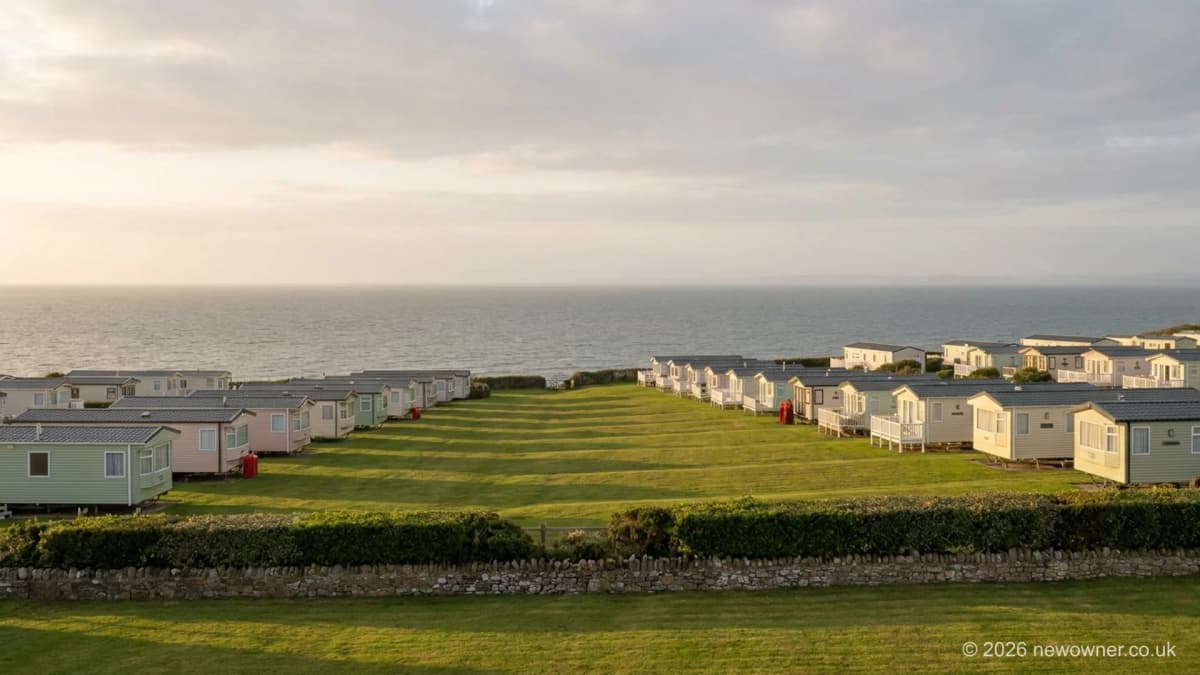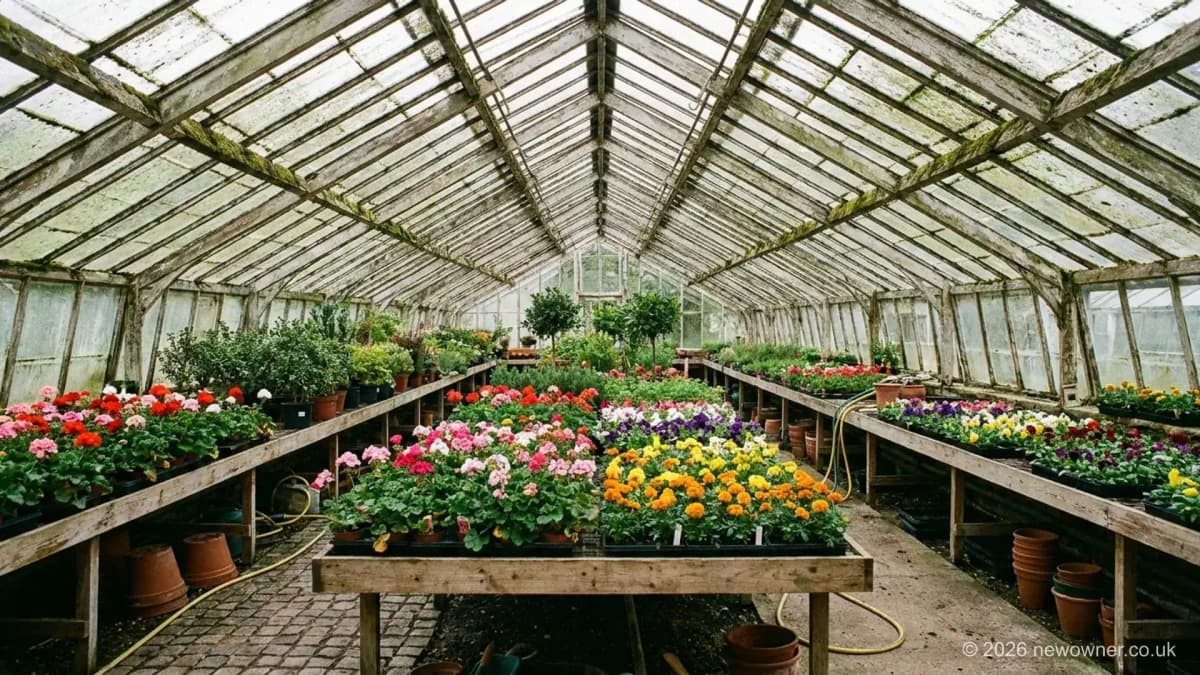
Leasehold made up 43% of garden centre sales in 2025, against less than 10% the year before.
The strongest garden centre market in years
If you have been half-watching this sector while wondering whether a garden centre for sale is worth a look, the 2025 numbers will surprise you.
Christie and Co sold 29% more garden centres in 2025 than in 2024, advising on £171m of combined value, and reports that most centres achieved total revenues at least 10% higher than the previous year. More than half of the centres it brought to market received four or more offers.
Set that against its price index across every sector it covers, which moved 4.2% over the same twelve months, and garden centres were a clear outperformer. The demand side supports it: the Horticultural Trades Association estimates that UK households spent around £9 billion on retail garden products in 2025, and research by Oxford Economics published in November 2024 put environmental horticulture and landscaping's contribution to UK GDP at an estimated £38 billion in 2023, supporting around 722,000 jobs.
A word of caution on sector size, because you will see wildly different figures. The HTA estimates around 1,500 garden centres and retail nurseries in the UK. Savills, in 2023, referred to around 2,300 garden centres sharing roughly £5bn of retail spend. Commercial databases that lump garden centres in with pet shops give numbers several times higher. These are different definitions of the same thing, not competing measurements, and no official count exists. Use them for orientation, not for a business case.
The freehold assumption no longer holds
The single most consequential change in this market for a buyer is one almost nobody talks about.
Christie and Co reports that 43% of garden centre sales in 2025 were leasehold, against less than 10% the year before. That is a structural shift, not a blip, and it changes what buying a garden centre means.
Two very different purchases
The freehold model. You buy land, glasshouses, car park and business together. Capital requirement is high, often several million for a substantial site. In exchange you own an appreciating asset, you control your own rent, and you have security a lender likes.
The leasehold model. You buy the trade and take on a lease. Entry price falls dramatically, which opens the sector to buyers who could never have contemplated it. What you give up is land value, rent certainty and a large part of the asset backing that made garden centres attractive to lenders in the first place.
Neither is wrong. What matters is that you know which one you are looking at and price accordingly. A leasehold garden centre valued as though it were freehold is the most expensive mistake available in this sector.
If you are looking at a leasehold site, the lease deserves as much time as the accounts: unexpired term, rent review pattern and basis, service charge, repairing obligations on glasshouses and hard landscaping, break clauses and any restriction on use or assignment. Glasshouse repair liabilities under a full repairing lease can be very large. Our guide to buying a freehold business covers the other side of that comparison.
You are probably buying a restaurant with plants attached
The modern garden centre is a hospitality and retail hybrid, and treating it as a horticultural business will lead you to value the wrong things.
Walk any successful centre on a Sunday in March and count where people are. A large share will be in the cafe. Catering, gifts, homeware, Christmas and food halls now carry a substantial part of the revenue and often a disproportionate part of the profit, because plant margins are squeezed by supermarkets and online sellers while a coffee and a scone are not.
This matters for four reasons.
Different skills. Running a catering operation at volume is a different job from running a nursery. If the current owner has a strong catering manager, find out whether they are staying.
Different cost structures. Food waste, kitchen staffing, hygiene compliance and energy behave nothing like plant stock.
Different seasonality. A cafe smooths the year in a way plants do not. It is often the reason a centre trades through January at all.
Different valuation. Hospitality revenue and horticultural revenue justify different multiples and carry different risks.
Ask for revenue and gross margin by department, monthly, for three years. Plants, sundries, gifts, catering, Christmas, and anything else material. If the seller cannot produce that, they do not know their own business well enough for you to rely on their figures. Our guide to analysing a business before buying covers how to work through this properly.
Seasonality and weather are the operating risk
No sector in UK retail is more exposed to the weather. A cold, wet April removes the peak selling weeks and there is no way to recover them, because nobody buys twice as many bedding plants in June to compensate.
This has three practical consequences for a buyer.
Never judge a garden centre on one year. Get five years of figures if you can, three at absolute minimum, and look at the shape of each year rather than the totals. A business that made its numbers in 2025 because spring was kind is a different proposition from one that made them in a bad year.
Model the cash cycle, not just the profit. Stock has to be bought and paid for before the season, staff have to be hired before the customers arrive, and the money comes in over a compressed period. A garden centre can be profitable and still run out of cash in February. Ask to see the bank balance by month, not the year-end position.
Understand the Christmas trade. For many centres, Christmas is the second season and it is bought in the spring. A centre with a strong Christmas offer has a genuinely different risk profile from one that closes down in October.
Then there is the plant stock itself. Living inventory dies, and the value of what is standing outside when you complete is genuinely uncertain. Agree how stock will be valued and by whom, in the heads of terms, and make sure the method accounts for condition rather than just count.
What to check before you offer
Alongside the standard due diligence checklist for buyers:
Start with what the site is allowed to do
Planning consent and use. Garden centres frequently sit on land with agricultural or horticultural planning history, and the retail element may be constrained. Check what the consent actually permits, particularly for the cafe, the gift retail and any events. Restrictions on non-horticultural retail are common and they cap your growth.
The site infrastructure. Glasshouses, polytunnels, irrigation, drainage, heating and the car park. These are large capital items with finite lives and they are easy to defer. Ask what has been replaced in the last ten years and what is due.
Energy contracts. Heated glasshouses and a commercial kitchen make this a material line. Get the contract and its expiry date.
Supplier relationships. Which growers, on what terms, and whether any arrangement is personal to the outgoing owner.
Then the running costs
Business rates. Check the actual rateable value. In England for 2026/27 the retail, hospitality and leisure multiplier is 38.2p against a standard multiplier of 48p, and properties with a rateable value of £12,000 or less get 100% small business rate relief. Most substantial garden centres will be well above the relief threshold, but the multiplier still matters.
Staff. Seasonal workforces are hard to recruit and the good ones return year after year because of relationships with a specific manager. Find out who those relationships are with.
Work through what to ask a seller as well, and if you are buying the company rather than the assets, read liabilities you inherit.
Who else is bidding
Christie and Co expects corporate buyers to continue dominating, with private and lifestyle investors remaining active in regional and rural areas. That split tells you where an individual buyer can realistically win.
Group operators have been acquiring steadily and they buy for network fit: catchment, site size, car parking, room to expand the catering offer. They move fast and they have funding in place. If you are bidding against one on a large site near a motorway junction, you will probably lose.
Where an individual or a small partnership can compete is on the sites groups pass over. Smaller acreage, less obvious catchment, a strong local following, a business that needs an operator rather than a system. Those exist in reasonable numbers, particularly on leasehold terms, and they are where the 43% leasehold share is coming from.
Given that more than half of centres brought to market in 2025 received four or more offers, being ready matters. Have your funding agreed in principle, your solicitor instructed and your questions written before you view. Our guide to making an offer covers the negotiation, and financing a business purchase covers the funding routes.
How to find a garden centre for sale
A garden centre for sale usually comes to market through a small number of specialist agents and a handful of general commercial firms, and the total volume of transactions each year is modest. Registering with the specialists is worth doing early, because good sites do not sit around.
Be clear about tenure before you start searching. Freehold and leasehold opportunities are different businesses at different price points and mixing them in one search wastes your time.
You can browse current NewOwner listings and filter by sector and region, including rural and commuter-belt catchments across London, Bristol, and Birmingham. If you are comparing land-and-trade options, the caravan park guide covers a sector with a similar asset structure, and how to buy a business in the UK walks through the process from first enquiry to completion.
If you own a centre and are considering selling, the seller's guide covers preparation, and given how competitive 2025 was, the 2026 multiples data is worth reading before you set an asking price.
The honest summary
Garden centres had a genuinely good 2025: more transactions, higher revenues, multiple offers on most sites brought to market. That is not a sector to be nervous about.
The two things to get right are tenure and departments. Leasehold went from under 10% of sales to 43% in a single year, and a leasehold centre valued on freehold logic is a serious overpayment. And the business you are buying is a mixed retail and hospitality operation where catering may well be carrying the profit, so get the department-level figures before you form a view, test the trading EBITDA in our UK business valuation calculator, and use our Business Buyer Starter Kit alongside our platform verification standards.
Everything else comes down to weather, which nobody controls, and cash timing, which you can plan for if you look at the monthly figures rather than the annual ones.